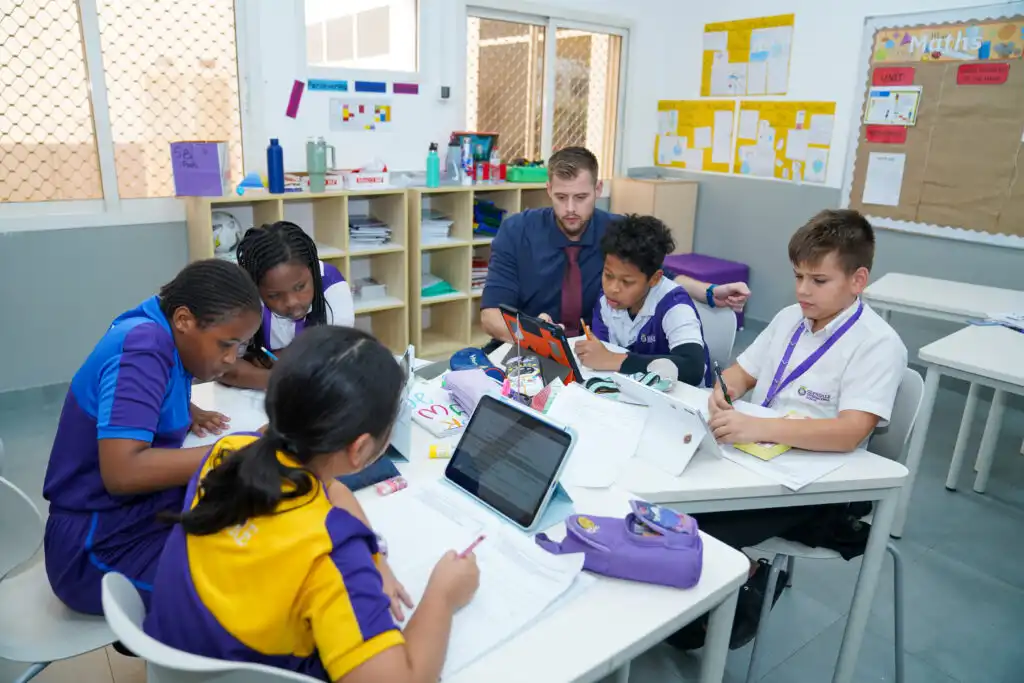
Exploring the Role of Artificial Intelligence in Glendale International School, a British Curriculum School in Dubai
Artificial Intelligence (AI) is transforming every aspect of modern life — and education is no exception. For parents seeking the best British curriculum school in Dubai, understanding how AI is shaping teaching and learning is essential.
At Glendale International School, AI is seen not as a replacement for teachers but as a partner in creating personalised, data-driven, and engaging learning experiences. While AI offers remarkable opportunities to enhance education, it also presents new challenges that schools must approach thoughtfully.
Below, we explore the advantages, applications, and potential drawbacks of AI in classrooms, along with what the future may hold for innovative schools like Glendale.
What are the advantages of AI in Education?
AI brings numerous benefits to 21st-century learning environments. One of the greatest advantages is personalised education. AI-powered platforms can analyse student performance, identify learning gaps, and adapt lessons to suit individual needs.
For instance, if a student struggles with a specific topic, AI tools can instantly recommend targeted exercises or resources to reinforce understanding. At Glendale International School, teachers use AI insights to monitor progress, plan interventions, and dedicate more time to creative, human-centred teaching. Book a campus tour today and see it for yourself!
AI also automates administrative tasks such as grading, attendance, and report generation — giving educators more time to focus on what truly matters: connecting with students and inspiring a love for learning.
How AI Is Being Used in Schools like Glendale?
Across international schools in Dubai like Glendale International School, AI is already enhancing classroom experiences in dynamic ways.
- Intelligent tutoring systems provide personalised support.
- Chatbots help answer student queries instantly.
- AI-powered language apps aid in improving vocabulary and pronunciation especially for students who need EAL support.
- Adaptive assessments offer real-time feedback.
- Virtual reality (VR) and AI integrations enrich lessons with immersive experiences — from virtual science labs to historical simulations.
At Glendale, AI is used to promote engagement, critical thinking, and collaboration, ensuring that technology enhances rather than replaces human interaction.
What is the Future of AI in Education?
The future of AI in education is filled with promise. Experts predict that AI will soon play an even larger role in:
- Designing personalised learning pathways for each student.
- Providing real-time analytics for teachers to improve learning outcomes.
- Supporting students with special educational needs through adaptive tools.
In a forward-thinking British curriculum school like Glendale, AI could revolutionise how educators plan lessons, assess progress, and nurture every learner’s potential — making education not only efficient but also deeply engaging and inclusive.
What are the challenges and limitations of AI in the classroom?
Despite its transformative potential, AI comes with challenges that require balance and oversight.
- Reduced human interaction: Overreliance on technology can limit face-to-face communication, essential for social and emotional growth.
- Data privacy and cybersecurity risks: Protecting student data is a top priority.
- Algorithmic bias: Ensuring AI remains fair and unbiased in its recommendations.
- Teacher training: Educators need proper support to integrate AI effectively.
- Dependence on AI tools: Students must still be encouraged to think critically and independently.
Glendale International School recognises these challenges and ensures that AI complements the human touch that defines holistic education.
What is the Initial Impact of AI on Education?
The early impact of AI in classrooms has been highly positive. Teachers report increased efficiency and more targeted instruction, while students enjoy interactive, gamified, and personalised learning experiences.
However, the school also emphasises ethical AI use, ensuring that innovation supports — not replaces — the meaningful teacher-student connection that defines the best British curriculum school experience.
AI enhances learning by offering immediate feedback, adaptive challenges, and resources tailored to each student’s pace. By analysing performance patterns, AI systems suggest additional materials or step-by-step support — particularly beneficial in subjects like mathematics, science, and languages.
This approach keeps students motivated, fosters independence, and ensures that learning remains active, enjoyable, and effective.
AI Detection and Academic Integrity
As AI tools such as chatbots and text generators become more advanced, maintaining academic honesty is increasingly important. Schools use AI detection tools to verify the authenticity of student work and uphold the principles of integrity and fairness.
Glendale International School integrates these systems responsibly, helping students understand the importance of original thought and ethical technology use — a crucial aspect of modern education.
AI in education is not about replacing teachers — it’s about enhancing learning. When used wisely, AI can personalise education, improve outcomes, and prepare students for a technology-driven world.
At Glendale International School Dubai, we believe the key lies in balance: combining cutting-edge technology with compassion, creativity, and human connection. Together, these elements ensure that students grow not only smarter, but also kinder, more confident, and more capable of leading the future.