In a city as dynamic and diverse as Dubai, language is more than a means of communication. It is a bridge to culture, identity, and belonging. Among the many languages spoken in the UAE, Arabic holds a uniquely powerful place. It is the language of the nation, the heartbeat of its heritage, and a vital part of everyday life. For students growing up in the UAE, learning Arabic is not just an academic requirement; it is an opportunity to connect deeply with the country they call home.
At Glendale International School Dubai, a leading British curriculum school in Dubai, Arabic is taught with purpose, care, and clarity — ensuring that both native and non-native speakers develop confidence, understanding, and respect for the language in line with KHDA and UAE Ministry of Education guidelines. To know more about Glendale, book a campus tour.
What Are the Languages Taught at Dubai Schools?
Dubai schools reflect the city’s global outlook, offering a wide range of languages to meet the needs of its diverse population. Most schools teach:
- English as the primary language of instruction (especially in British, IB, and American curricula)
- Arabic, as mandated by the KHDA and UAE Ministry of Education
- Additional languages such as French, Hindi, Urdu, Spanish, or Mandarin, depending on the school and curriculum
Arabic is a compulsory subject in all Dubai schools, taught to both Arab and non-Arab students, with programmes designed to suit varying levels of proficiency. This ensures that every child gains exposure to the language, regardless of background.
What Is the Importance of Learning Arabic in UAE Schools?
Arabic is deeply woven into the cultural, historical, and social fabric of the UAE. Learning Arabic helps students:
- Understand and respect the national identity and values of the country
- Engage meaningfully with the local community
- Appreciate Emirati traditions, heritage, and customs
- Develop a sense of belonging in their environment
From a KHDA perspective, Arabic education plays a vital role in supporting students’ cultural awareness, personal development, and citizenship, which are key inspection focus areas. Schools are expected not only to teach the language, but to ensure students make appropriate progress based on their starting points.
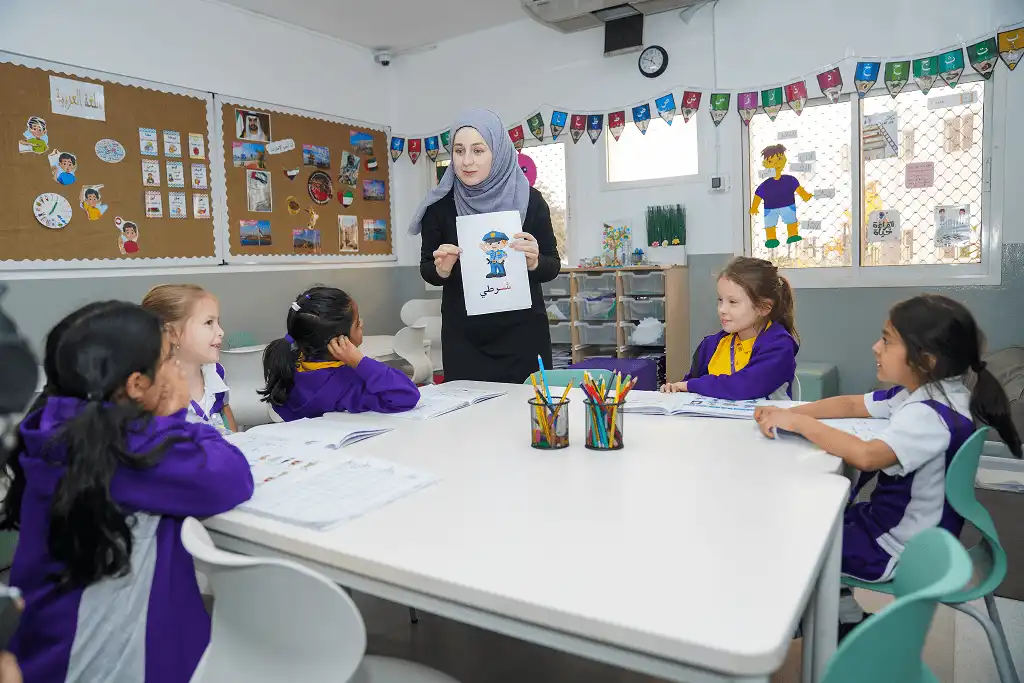
At Glendale International School Dubai, Arabic is taught in line with the KHDA and UAE Ministry of Education syllabus, with clear progression pathways and age-appropriate learning outcomes. The school places strong emphasis on creating a respectful and inclusive classroom environment where students feel encouraged to participate, practice, and grow.
What Are the Benefits of Learning Arabic?
Learning Arabic offers students a wide range of academic, personal, and social benefits:
1. Cultural Understanding and Respect
Arabic opens the door to understanding the UAE’s culture, traditions, and values. It fosters mutual respect and helps students navigate life in a multicultural society with empathy and awareness.
2. Cognitive and Academic Growth
Language learning enhances memory, problem-solving skills, and critical thinking. For younger learners, Arabic supports early literacy development, while older students benefit from improved linguistic and analytical abilities.
3. Communication and Confidence
Even basic Arabic empowers students to communicate in everyday situations, building confidence and a sense of independence within the community.
4. Future Opportunities
As the UAE continues to grow as a global hub, knowledge of Arabic provides a valuable advantage in higher education, careers, and international engagement.
Who is Arabic taught at Glendale International School?
Glendale International School Dubai recognises that every learner’s journey with Arabic is unique. That is why the school offers a structured and differentiated Arabic programme designed to meet the needs of both native and non-native speakers.
- Arabic is taught from the early years onwards, ensuring early exposure and steady progression
- Students are grouped appropriately based on language ability, allowing for targeted instruction
- Lessons follow the KHDA-approved UAE Ministry of Education syllabus
- Teaching approaches are interactive, engaging, and aligned with best practices in language acquisition
Beyond the classroom, Arabic learning is enriched through:
- Cultural activities and national celebrations
- Opportunities to explore Emirati heritage
- Meaningful connections to real-life contexts
This balanced approach ensures that students not only learn Arabic, but also understand its relevance and value in their daily lives.
At Glendale International School Dubai, Arabic education is about more than meeting curriculum requirements—it is about nurturing respect, identity, and global understanding. By supporting both native and non-native speakers with care and clarity, the school ensures that every student feels included, supported, and confident in their learning journey.
In doing so, Glendale prepares students to thrive academically while growing into thoughtful, culturally aware individuals—ready to contribute positively to the UAE and the wider world.