When one asks, “What is holistic development?” in the context of early childhood, the answer must embrace the full spectrum of human growth, which predominantly includes physical, cognitive, linguistic, social, emotional, and even spiritual wellness.
In early childhood, particularly the first five to eight years, children’s brains and bodies undergo rapid, intertwined growth. During this window, a child’s interactions with caregivers, peers, and the environment form the building blocks not only for academic learning, but also for self-esteem, empathy, communication skills, physical coordination, curiosity, and values.
By facilitating holistic development in education from the outset, parents and schools cultivate individuals who are capable, confident, and emotionally grounded.
In this blog, I explore the holistic development of students, especially during early years, how it manifests in daily life, why it is critical for long-term impact, common misconceptions, and actionable steps for caregivers and educators.
What is Holistic Development
At its core, holistic development is the comprehensive growth of a child across multiple dimensions: physical, cognitive, social, emotional, and linguistic, rather than just academic achievement.
- Physical development includes motor skills, coordination, strength, health habits, and overall physical well-being.
- Cognitive and intellectual growth entails critical thinking, problem-solving, curiosity, creativity, memory, reasoning and learning capacity.
- Language and communication include vocabulary, expression, and comprehension.
- Social and emotional growth involves self-awareness, empathy, emotional regulation, relationships, and cooperation.
- Moral/spiritual or adaptive development refers to values, self-management, independence, and the ability to adapt and respond to life’s challenges.
Holistic development examples include a child learning to tie shoelaces (physical independence), sharing toys and negotiating with friends (socioemotional communication), or solving a puzzle with peers (cognitive, social, and emotional).
One educator summarises it succinctly: “holistic development is the social, emotional, physical, mental, and intellectual growth of a person.”
Why Holistic Development is Important in Early Years
The early years of childhood are arguably the most critical in shaping a person’s life trajectory, because during this phase, all domains of development are highly malleable and deeply interconnected.
As noted by a respected early-childhood programme, when a child “encounters objects, events, and other people, all spheres of their development and learning are in action at the same time.”
Imagine a child’s diet made up entirely of carbohydrates, with no proteins, vitamins, minerals, or healthy fats to support growth. They may have bursts of energy, but the body cannot truly build, repair, or prosper.
Similarly, emphasising only academic or cognitive skills while neglecting emotional, social, or physical development risks producing children who excel at exam scores but struggle with relationships, resilience, self-care, or adaptability.
Early childhood is the time to build healthy bodies, curious minds, empathetic hearts, effective communicators, and socially aware citizens.
How Holistic Development Shows Up in Daily Life
Holistic development is not achieved by a rigid curriculum alone, but through everyday experiences, interactions, play, care, and varied learning at home, in the community, and in school.
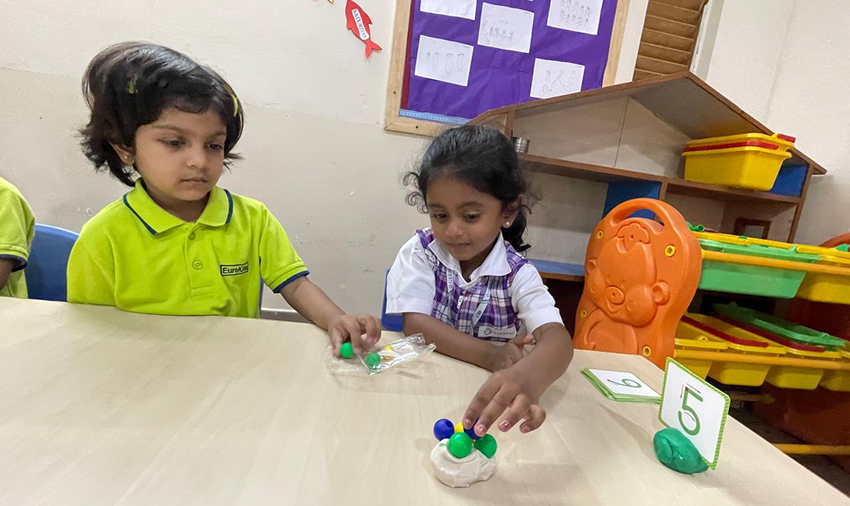
- Through play and exploration: Encouraging a child to play with blocks, paint, run, climb, or simply explore their surroundings develops coordination, spatial awareness, creativity, and problem-solving. Educational psychology emphasises “learning through play” as foundational for cognitive, social and emotional skills.
- Through language and conversation: Simple daily actions, such as reading stories, talking about feelings, asking open-ended questions, promote linguistic competence, curiosity, empathy and critical thinking.
- Through social interaction: Group activities like “show and tell” help children practise listening and speaking, develop patience, and learning to respect differing perspectives, building empathy, confidence, and social competence.
- Through balanced care for mind and body: Adequate nutrition, sleep, physical activity, and emotional security provide the child with the health and stability needed to learn, grow, adapt, and engage meaningfully with the world.
Thus, holistic development in education cannot be treated as a separate module but as something entwined in everyday life, from playtime to family meals to classroom activities.
Long-Term Benefits
- Children nurtured holistically are more likely to become resilient, adaptable, emotionally grounded adults who can helm life’s challenges with balance.
- They are better equipped with social intelligence, collaboration skills, communication and empathy, making them better citizens and more effective in relationships and leadership roles.
- Without health, emotional stability, or social skills, cognitive learning tends to be fragile, but with a well-rounded base, learning becomes more natural, sustainable, and meaningful.
- From a societal viewpoint, investing in holistic early-childhood development creates communities of individuals with empathy, creativity, and cooperation.
For families seeking high-quality schooling, many of the best IB schools and top Cambridge schools in Hyderabad prioritise holistic curricula and environments; they recognise that true success lies in building capable, confident, compassionate humans, not just high achievers.
Common Misconceptions: What Holistic Development Is Not
Even as holistic development gains acceptance, several misconceptions continue to hinder its implementation:
- “It’s all about being academic; focus on reading, writing, and math first.”
The truth is that academic skills are only one dimension. Holistic development fosters balanced capabilities across all arenas. - “Play is just fun; real learning happens in textbooks.”
In reality, play is one of the most powerful modes of learning. Through play, children explore, experiment, problem-solve, collaborate, express creativity and emotions. - “Holistic development is only for privileged families or fancy schools.”
Holistic growth doesn’t demand expensive toys or elite schools. It calls for supportive, nourishing environments, responsive caregiving, meaningful interactions, play, and opportunities for exploration. - “It’s a nice-to-have extra, not essential.”
Actually, holistic development in early childhood forms the foundation for lifelong learning, well-being, resilience, social competence and adaptability.
By acknowledging and clearing these misconceptions, parents and educators can better appreciate why holistic approaches deserve priority from preschool onward.
What Parents and Schools Should Do: Practical Steps
If you are a parent, caregiver, educator, or someone in search of a school, here are practical ways to support holistic growth:
- Prioritise a balanced daily routine: combine active play, outdoor movement, creative activities (art, storytelling, music), social interaction, quiet time and rest.
- Choose environments that value holistic pedagogy: if you are considering IGCSE Cambridge schools in Hyderabad or other institutions, look for programmes that emphasise play-based learning, social-emotional learning (SEL), communication, creativity, values and physical well-being.
- Encourage social and emotional learning (SEL): allow children to express feelings, learn conflict resolution, empathy, and cooperation via group activities and conversations.
- Encourage curiosity and cognitive exploration: give children opportunities to ask questions, explore materials, solve problems, build, draw, and imagine, rather than relying on rote memorisation or repetitive drills.
- Promote a safe, caring, responsive emotional environment: children need to feel secure, loved, heard and cared for; only then does authentic learning take root.
- View development as long-term gains: resist pressure to push early reading, writing or exam prep. Instead, value social skills, emotional maturity, physical growth, curiosity, and creativity equally for a child’s future.
Final Thoughts
We are in a time and place where academic achievements, standardised testing, curriculum milestones, and credentials often dominate parental and institutional attention.
The concept of holistic development stands as a timely reminder that children are not test machines; they are human beings, growing, learning, feeling, becoming.
Any institution that markets itself as a top Cambridge school in Hyderabad or as one of the best IB schools would do well to look beyond academic reputation and instead assess how the school promotes the whole child: mind, body, heart, values, and community.