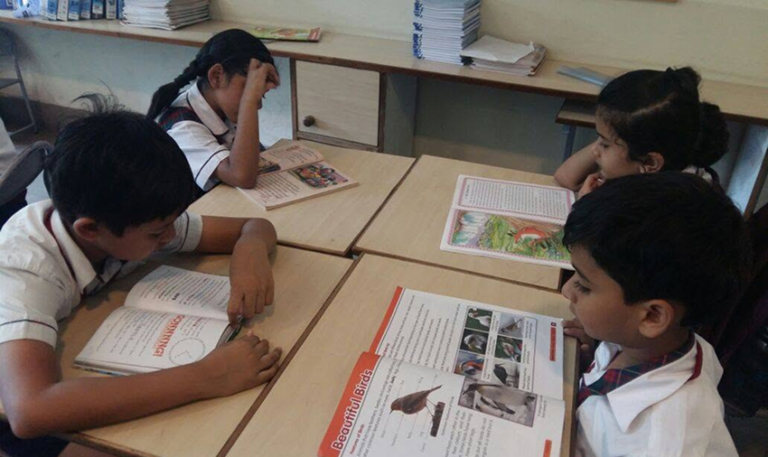

The jigsaw method is a cooperative learning strategy in which each student holds a “piece” of the lesson, and the class only gets the full picture when everyone shares what they’ve learned.
Students aren’t passively listening or racing to finish worksheets. They’re talking, explaining, debating, and teaching one another.
That’s the power of the jigsaw learning method, a cooperative learning strategy that turns students into active contributors rather than silent receivers.
It turns students from passive listeners into active experts and teammates, which is why so many modern classrooms and IB programmes use it.
What is the Jigsaw Method?
In the jigsaw classroom, the teacher breaks a topic into parts, and each student becomes an expert on one part. Today, teachers use these strategies from elementary school to higher education classroom settings.
In simple terms, it’s a cooperative method that emphasises teamwork and collaboration. Students are divided into expert groups (teams) and are assigned a topic or a portion of a lesson.
How Does it Work?
Jigsaw in education follows a clear, replicable four-step process that teachers find easy to implement:
- Home Groups Formation: The teacher divides the class into small heterogeneous groups, called home groups. These groups should be diverse in ability levels, backgrounds, and learning styles to maximise peer learning benefits.
- Expert Groups Assembly: The topic is divided into segments. Each student gets one segment to master. Students who have the same segment leave their home groups. They form “expert groups” where they study, discuss, and understand their assigned material together.
- Return and Teach: After becoming experts, students return to their home groups. Each expert teaches their part to their teammates. Since everyone in the group has unique information, active listening and clear communication are essential.
- Assessment and Synthesis: Students complete an individual assessment that covers all segments, not just their area of expertise. This ensures personal accountability. You can’t succeed unless your teammates taught you well, and they can’t succeed unless you taught them well.
Benefits of the Jigsaw Method
The benefits of the jigsaw method are numerous –
- Deeper Learning: Students understand better when they need to explain it, not only listen. The process of presenting and discussing concepts helps clarify ideas and leads to a deeper understanding of the subject.
- Enhanced Academic Performance: It helps students become “experts” who teach peers, ensure accountability, deeper conceptual mastery, and long-term knowledge retention.
- Social Skills and Confidence: Jigsaw activities require students to work together as a team to succeed, reducing competitive behaviour, fostering active listening and effective communication, and increasing self-confidence in their academic abilities.
- Inclusive Classrooms: The cooperative structure of the jigsaw method supports mixed-ability groups and fosters more inclusive, less competitive learning environments.
Jigsaw Activities Teachers Can Use in Classrooms
Jigsaw activities are a cooperative learning strategy in which students become “experts” on one segment of a topic and then teach that information to their peers.
Reading Jigsaw
Teachers can divide a long article into 4-6 sections, and students are given different sections of a single text or multiple related articles. Each student explains key ideas to the group, which helps improve comprehension and reduce reading overload.
Concept-based Jigsaw
Teachers can split or break a long topic into small key concepts, and each expert group prepares a simple model or diagram to explain the concept to their peers and teachers. It helps students to gain deeper conceptual clarity through peer teaching.
Perspective Jigsaw
Choose an issue like urbanisation, social media, climate change, and assign each expert group a different lens: economic, social, environmental, cultural, and ethical issues. In each group, students share their perspectives and jointly write a balanced paragraph or make a short presentation on an issue.
Skill Jigsaw
Identify four to five key exam skills. These are reading questions carefully, structuring answers well, using diagrams, managing time effectively, and reviewing work for accuracy. Each expert group will coach one skill and teach it to their classmates.
Project Research Jigsaw
For a group project, teachers assign each expert group a different research area, such as background facts, current data, local impact, global comparisons, and possible solutions.
Experts in each group share their findings with their home groups. These groups then create the final product based on all contributions.
Conclusion
The jigsaw learning method transforms classrooms into communities of learners. It’s a cooperative approach where a large topic is divided into smaller parts. Each student in a “home group” becomes an “expert” on a specific section.
Rather than competing for answers, students depend on each other. They listen, explain, and grow together. When used well, the jigsaw strategy raises accountability, promotes deeper understanding, encourages teamwork, and boosts academic performance.
At Glendale India, the jigsaw method is used as a key cooperative learning strategy aimed at changing students from passive listeners to active “experts.”
We believe that when learning is shared, students don’t just learn more, they learn better.