Key Takeaways
|
What Are ATL Skills in the IB MYP?
ATL skills, or Approaches to Learning, are a set of five interconnected skill categories that run as a common thread through every subject in the MYP. They are the strategies and habits that students develop to become self-directed, independent learners. Rather than telling students what to think, the MYP teaches them how to think. The International Baccalaureate describes ATL skills as providing “the foundation for independent learning and encouraging the application of knowledge and skills in unfamiliar contexts.” In plain terms: these are the skills that help students figure things out on their own, in school and beyond. Think of it this way. A student who knows the periodic table is knowledgeable. But a student who knows how to research a problem, structure an argument, manage a deadline, and collaborate with a teammate is equipped. That distinction is what ATL skills in IB aim to build.Why Do ATL Skills Matter for Your Child?
The world your child will graduate into looks very different from the one we grew up in. Careers are shifting. AI is reshaping industries. The ability to adapt, communicate, and self-regulate is becoming more valuable than rote learning. ATL skills address this gap directly. They are built to complement subject learning, not replace it. A student studying history also practises research skills. A student working on a group science project develops social and communication skills. Learning is never siloed in the MYP. For parents choosing between schools, this matters. The question to ask is: will this school give my child knowledge, or will it teach them to use that knowledge? The best IB schools prioritise both, and ATL skills are the bridge between the two.What Are the Five Categories of ATL Skills?
The MYP organises ATL skills into five broad categories, each covering a cluster of related abilities. Here is a clear breakdown:| ATL Skill Category | What It Involves | Real-World Application |
| Communication Skills | Expressing ideas clearly in writing, speaking, and listening; interpreting information from various sources | Presentations, essays, class discussions, emails |
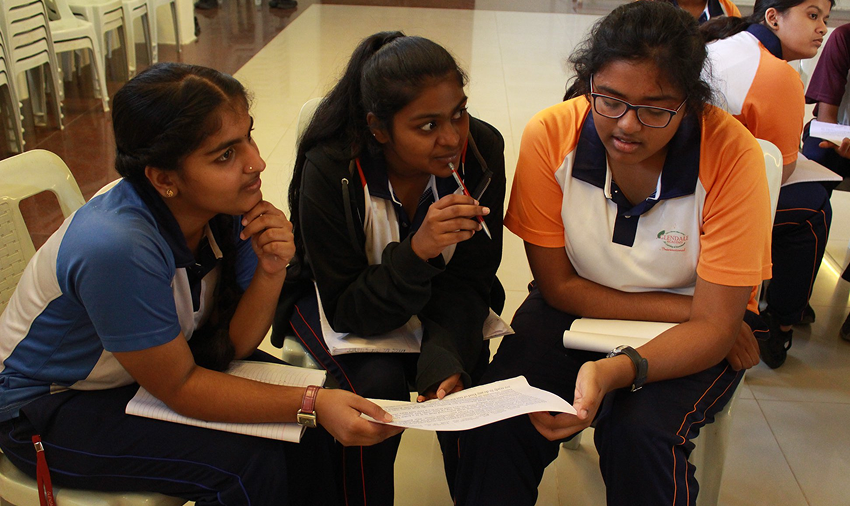
| Social Skills | Collaborating effectively, respecting diverse perspectives, resolving conflict constructively | Group projects, team sports, peer feedback |
| Self-management Skills | Managing time, setting goals, staying organised, regulating emotions and behaviour | Project deadlines, study schedules, exam prep |
| Research Skills | Finding, evaluating, and using credible information; understanding ethical use of sources | Personal Project, essays, interdisciplinary units |
| Thinking Skills | Critical thinking, creative thinking, ethical reasoning, transfer of knowledge | Problem-solving, design challenges, debates |
How Are ATL Skills Taught in the MYP Classroom?
A common question from parents is: are ATL skills taught as a separate class? The short answer is no, and that is actually by design. ATL skills are woven into every subject, every project, and every assessment throughout the MYP. Here is how this looks in practice:- In a Language and Literature class, students develop communication and thinking skills by analysing texts and crafting written arguments.
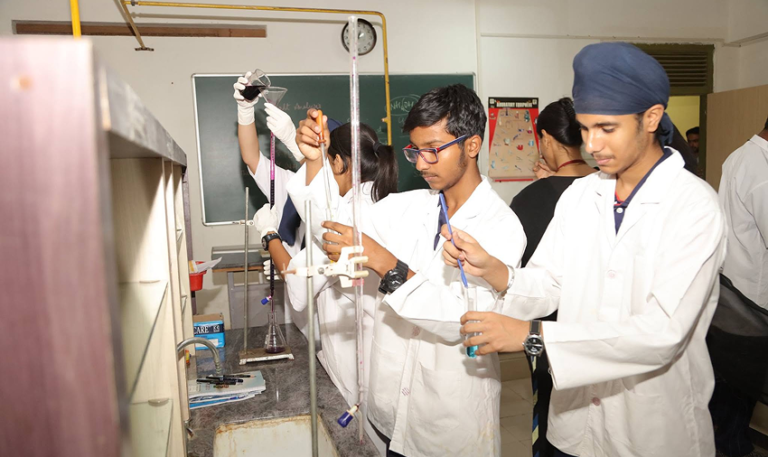
- In Sciences, students use research and self-management skills when conducting experiments and presenting findings.
- The MYP Personal Project, completed in Year 5, is perhaps the most powerful vehicle for ATL skills, as students independently plan, research, create, and reflect on a sustained piece of work.
- Teachers embed explicit ATL skill instruction into their lesson plans, identifying which skills a unit will develop and giving students feedback on their progress.
How Do ATL Skills Prepare Learners for the Future?
When we speak about future readiness, we are talking about a student’s ability to navigate complexity, work well with people from different backgrounds, manage uncertainty, and keep learning long after formal education ends. ATL skills in IB are specifically designed with these outcomes in mind. Consider the 4Cs that define 21st-century competencies: Critical Thinking, Communication, Collaboration, and Creativity. Each maps directly onto the five ATL skill categories. This is by design. The IB framework is not simply about academic performance; it prepares young people for careers, higher education, and civic life. For students in schools in Tellapur, Hyderabad and across the city, access to this kind of skills-based education can make a meaningful difference in how prepared they feel entering university or the workforce. Among IB board schools in Hyderabad, Glendale School stands out for its commitment to genuine MYP implementation, where ATL skills are actively embedded into daily learning rather than treated as an add-on. Whether a student aspires to study engineering in Pune, business in London, or creative arts in New York, the habits of mind developed through Approaches to Learning travel with them. These are the skills that employers notice, universities value, and life demands.FAQs
ATL skills, or Approaches to Learning, are five categories of skills that the IB MYP uses to help students become better learners. They cover communication, social interaction, self-management, research, and thinking. Rather than focusing only on content, the MYP ensures students develop the habits and strategies they need to tackle any learning challenge.
No. ATL skills begin in the IB PYP and are developed further in the MYP before being applied at a high level in the IB Diploma Programme. Beyond formal education, these skills translate into strong professional habits and personal resilience.
Look for a school where teachers explicitly identify ATL skills in their unit plans and give students structured feedback on them. Strong MYP schools also involve students in self-assessment of their ATL skill development throughout the year.
All five categories are equally important and designed to complement each other. That said, self-management skills are often foundational, as the ability to organise, set goals, and regulate behaviour underpins success in developing all other ATL skills.
At Glendale School, one of the leading best schools in Hyderabad offering the IB curriculum, ATL skills are not treated as a checkbox. They are embedded across subjects, explicitly taught, and assessed as part of the school’s approach to holistic education. Students develop these skills progressively from the PYP through the MYP, building genuine independence and readiness for the world ahead. Visit www.glendaleschool.org to learn more about our programmes.