
Key Takeaways
|
Innate leadership abilities are rare to come by, but that doesn’t mean that they can’t be nurtured. Some children are naturally outspoken, others are quiet observers, and both are completely normal starting points. What matters far more than where your child begins is this: leadership skills for students are not something a child is simply born with. They are built over time, much like reading or swimming, through the right guidance, practice, and encouragement. As a parent, you may already be wondering how you can help your child move from following instructions to confidently taking initiative. That is exactly what this guide on leadership education is here to help you with.
Why Is Leadership Important for Your Child’s Everyday Growth
This is why leadership matters so early in a child’s life, and it goes far beyond becoming a head boy or head girl someday. When nurtured early, leadership helps your child in several practical ways.
- Builds confidence and stronger decision-making ability
- Improves communication and active listening
- Helps children handle setbacks and conflict constructively
- Encourages empathy and a sense of responsibility toward peers
What Are the 10 Good Leadership Qualities Every Student Should Develop
Before working on strategies, it helps to know what you are actually building toward. Here are 10 good leadership qualities worth encouraging in your child, along with what each one looks like in everyday school life.
Leadership Quality | What It Looks Like in Everyday School Life |
Confidence | Speaking up in class discussions without fear of being wrong |
Communication | Explaining ideas clearly to teachers and classmates |
Empathy | Noticing when a classmate needs help or support |
Responsibility | Owning up to mistakes and following through on commitments |
Decision-making | Weighing options calmly before choosing a path |
Teamwork | Collaborating rather than competing with peers |
Integrity | Doing the right thing even when no one is watching |
Adaptability | Adjusting plans when situations change unexpectedly |
Initiative | Volunteering for tasks without being asked |
Active listening | Genuinely hearing others before responding |
How to Build Leadership Skills for Students: 10 Practical Strategies
Here is exactly how to build leadership skills in your child, one small habit at a time.
- Give your child small decisions to make at home, such as planning a weekend activity or choosing what they want to do with their time.
- Encourage participation in group activities, clubs and competitions.
- Model calm, fair leadership behaviour yourself, since children copy what they see
- Let them lead a simple family task, like organising a small activity with neighbourhood friends
- Create public speaking opportunities through class presentations, storytelling activities, contests and other small activities.
- Teach conflict resolution steps instead of stepping in and solving it for them
- Give them a mentoring role, such as guiding a younger sibling with homework
- Praise effort and the process, not only the final result
- Involve them in community service or peer-support activities
- Choose a school that offers structured, everyday leadership programmes rather than one-off events
When Should You Start Encouraging Leadership Skills in Children
Earlier than most parents expect. The National Curriculum Framework for the Foundational Stage, developed by NCERT under NEP 2020, lists positive learning habits and social-emotional and ethical development among its core curricular goals for children as young as three, alongside cognitive and physical growth. This means the small, everyday habits you encourage at home well before formal schooling begins already contribute to the leadership foundation your child will draw on for years.
Practising leadership qualities at Glendale
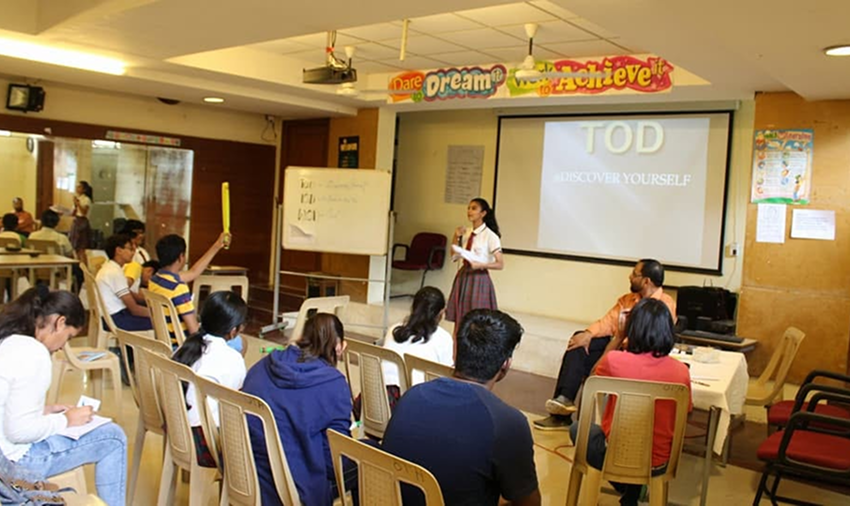
Leadership grows fastest when it is practised daily. Glendale schools, recognised as one of the best schools in Hyderabad, is noted for being India’s first Lighthouse School accredited by Franklin Covey Education for its successful implementation of the Leader in Me Programme, a framework woven into everyday classroom routines rather than treated as a separate activity. This recognition, which was also acknowledged by Sean Covey as marking the school among the leading institutions globally in this space, reflects a culture where every child, not only the visibly confident ones, gets consistent opportunities to lead.
Wrapping Up
Leadership is not reserved for the naturally outspoken or the academically brilliant. It is a set of everyday habits and qualities that every child can develop, starting right now. From the quiet observer who listens carefully and offers thoughtful solutions to the spirited child who takes charge confidently, all children have the potential to become leaders in their own unique way.
Whether you are exploring CBSE schools in Hyderabad, or looking specifically at the IB curriculum in Hyderabad, Glendale International Schools offer wonderful programmes that nurture your child into a well-rounded individual. To see it in practice, book a campus tour today or talk to our admissions team today.
FAQs
There is no single age, since foundational habits such as sharing, listening, and taking small responsibilities can begin as early as the pre-primary years and build gradually through school.
Yes. Leadership is not the same as being the loudest voice in the room. Many effective leaders lead through careful listening, empathy, and thoughtful decision-making.
CBSE often builds leadership through structured programmes, student councils, and co-curricular activities, while IB frameworks weave leadership into inquiry-based projects and collaborative learning tasks across subjects.
Indirectly, yes. Skills such as decision-making, communication, and responsibility often support better focus, time management, and classroom participation.
Look for small, everyday signs such as taking initiative without being asked, owning up to mistakes, or helping a friend resolve a disagreement.
It is a school-wide framework built around principles of personal leadership and responsibility, integrated into daily classroom routines rather than delivered as a standalone subject.


