
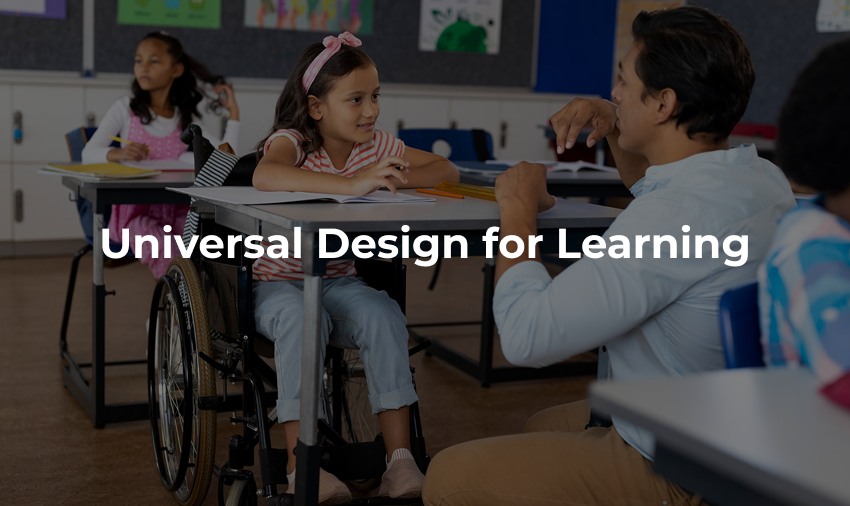
As parents explore top schools in Hyderabad, they often come across terms like inclusivity, personalised learning and adaptability. Behind many of these approaches lies something called Universal Design of Learning (UDL).
So, let’s start with the basics.
What is Universal Design of Learning?
What is Universal Design of Learning? In simple words, it is a teaching framework that ensures every child; irrespective of ability, background or learning style; has equal opportunities to learn. Instead of a one-size-fits-all classroom, it creates multiple ways for students to engage and access information that demonstrates their understanding.
At Glendale, where classrooms are lively and diverse, this approach ensures that each learner feels valued, included and supported.
UDL- The Full Form
Parents often ask: What does UDL stand for?
The UDL full form is Universal Design for Learning. This concept is inspired by architecture, where universal design ensures buildings are accessible to everyone; ramps for wheelchairs, wider doors or audio signals for lifts. Similarly; in education, UDL designs classrooms that are welcoming for all kinds of learners.
Why UDL Matters in Modern Classrooms?
In today’s world, classrooms are not uniform. Some students understand concepts quickly, some need more time and some require specific accommodations. The universal design of learning ensures that teaching methods are flexible enough to meet all these needs without labelling or limiting children.
This is particularly important in higher secondary schools in Hyderabad, where learners face complex subjects and unique challenges in their diverse career paths.
Principles of Universal Design for Learning
The principles of universal learning design are like the pillars that hold this framework together. They guide teachers to design lessons that work for everyone. Here are the three main ones-
- Multiple Means of Engagement
This principle answers the why of learning. It focuses on motivating students by offering choices; encouraging collaboration and making lessons relevant to real life.
Example: While learning science concepts; instead of simply listening to a lecture; students may choose to explore through group experiments and digital simulations.
- Multiple Means of Representation
This principle addresses the what of learning. Every student does not process information in the same way, so teachers present content in multiple formats like text, audio, video or visuals.
Example: In history, a teacher might combine textbooks with documentary clips and interactive timelines so students absorb information in varied ways.
- Multiple Means of Action and Expression
This answers the how of learning. Students should have different ways to show what they have learned through essays, projects, presentations or creative work.
Example: Instead of a standard test, a student might demonstrate their understanding of climate change by writing an article or presenting research to peers.
Together, these principles ensure classrooms are inclusive, engaging and effective.
UDL in Special Education
One of the strongest applications of UDL in special education is how it removes barriers. Instead of creating separate plans for students with special needs, UDL designs lessons that naturally include them.
For instance, providing captions for videos helps not just hearing-impaired students but also those who learn better by reading. Similarly, interactive activities support children with attention challenges while making lessons exciting for everyone.
Parents often ask how schools accommodate children with diverse learning needs. With UDL, the answer is simple: every child gets a fair chance to thrive in the same classroom.
Practical Examples of UDL in Action at Glendale
Here’s how UDL works day-to-day at Glendale-
- In Primary Classes- Teachers use colourful visuals, interactive whiteboards and songs to explain phonics.
- In Middle Schools- Group projects allow shy students to contribute quietly, while extroverts take the lead in presentations.
- In Higher Secondary Schools- Online simulations and project-based tasks prepare students for competitive exams while respecting their different learning styles.
By weaving UDL into teaching, classrooms become more inclusive and learning outcomes improve for all.
Why Top Schools in Hyderabad Prefer UDL?
Parents looking for the reputed schools in Hyderabad are increasingly drawn to institutions that practise UDL. Why? Because it reflects a school’s commitment to inclusivity, innovation and child-centred teaching. UDL signals that the school values diversity and adapts to every learner to equip students with the confidence to excel in real-world settings.
The Bigger Picture: Why UDL Matters for the Future?
Education is no longer about memorising facts; it is about creativity. The universal design of learning nurtures these skills by making classrooms flexible and student-centred. It offers an edge where every child feels included and achieves their best. That is not just theory; that is UDL in action.
At Glendale, we believe learning should be inclusive, engaging and meaningful for every child. By embracing the universal design for learning principles, we ensure that classrooms aren’t just about teaching; they are about reaching every learner.
If you are exploring CBSE schools admission, Glendale is here to welcome your child into a learning environment where everyone belongs and thrives. Contact us for admissions now!