
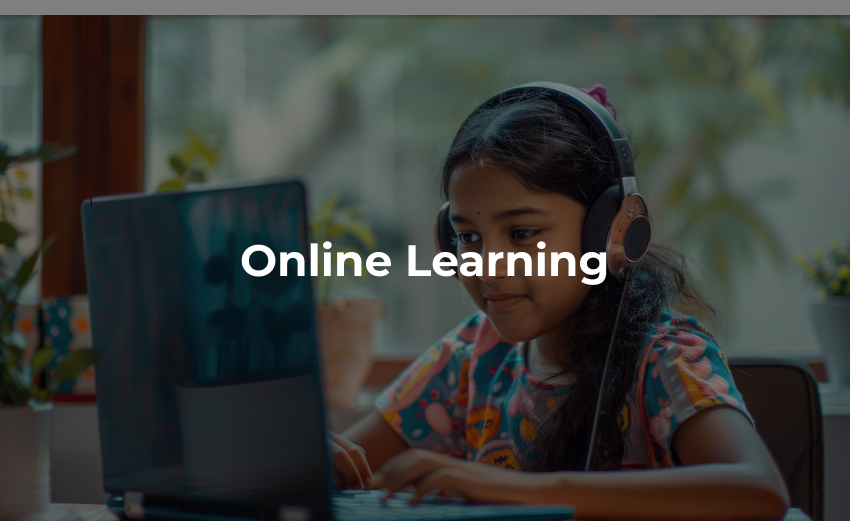
When parents and students ask us at Glendale, what is online learning; the simplest answer is this: it is education delivered digitally. It uses platforms that allow lessons, resources and interactions to happen over the internet.
The online learning market is expected to globally reach $400 billion by 2026. Additionally, 62.4% of higher education institutes also offer online degrees with their traditional degrees.
Let’s explore the online education system, its strengths, challenges and why it has become an essential part of modern education in international schools in Hyderabad, India.
What is Online Education?
So, what is online education? It refers to structured courses taught through digital platforms. These can include live video lessons, recorded modules, assignments, online tests and interactive discussions. Unlike traditional classrooms, learners access content anywhere and at any time, making it highly flexible.
At Glendale, students in international primary schools often use blended learning. Students use a mix of in-person teaching supported by interactive online modules for languages, maths drills or research projects.
Online Learning Benefits
The list of online education advantages is long, but here are the most impactful-
1. Flexibility and Accessibility
Students can learn lessons at their own pace, revisit tricky concepts or learn late at night if that suits them best.
2. Cost Efficiency
Online courses usually cost 50–80% less than the traditional equivalents. Families save on travel, printed materials and extra tuition. The online education system offers high-quality content that is more affordable.
3. Global Exposure
Learners can connect with peers, mentors and teachers worldwide. Online platforms often extend international collaborations.
4. Enhances Academic Outcomes
A whopping 81% of students say digital learning boosted their grades. Generally, the courses with community support see completion rates over 70%; compared to just 10-15% for self learners.
5. Improved Retention & Efficiency
Students retain 25-60% more from online learning versus just 8-10% in traditional classrooms. It also cuts study time by up to 60%
6. Customised Learning
Children who struggle with maths can replay recorded lessons, while fast learners can move ahead without waiting.
7. Increased engagement
Interactive quizzes, polls, and multimedia resources make lessons more lively than static textbooks.
These benefits of online classes for students are widely appreciated for their life and career benefits.
The Positives of Online Learning Beyond Academics
The positive effects of online classes are way beyond academics.
- Confidence building- Speaking up in online forums is often less intimidating for shy students.
- Stronger tech skills- Using digital tools prepares students for future workplaces.
- Time management- Balancing assignments and online sessions nurtures independence.
Parents at Glendale frequently share that their children have grown more responsible thanks to the accountability that online learning demands.
Online Education Advantages in Practice
Here’s how schools and families are using online education effectively.
- Virtual Libraries: Access to thousands of e-books and research journals.
- STEM Projects: Online simulations help visualise complex scientific experiments.
- Language Learning: Apps and live conversation partners boost fluency.
These tools enrich the curricula of the top international Hyderabad schools by blending global teaching practices with local strengths.
Challenges of Online Learning
Of course, the challenges of online learning must be acknowledged.
- Screen Fatigue- Long hours online can tire young eyes. Additionally, approximately 18–24% of learners worry about academic quality and feel less motivated without face-to-face interaction.
- Distractions- Home environments are not always as controlled as classrooms.
- Need for discipline- Without structure, some students may fall behind.
- Connectivity gaps- Uneven internet access can impact consistency.
Tip: Glendale encourages balanced schedules by combining online modules with outdoor play, reading and family interaction to overcome these challenges.
Online Education System at Glendale
At Glendale, the online education system complements classroom learning. For younger learners, digital tools reinforce phonics and numeracy. For senior students, virtual labs, research projects and international collaborations enhance subject depth. This hybrid approach ensures that students benefit from both worlds; structured in-person teaching and the freedom of digital learning.
About Online Education in 2025 and Beyond
As of 2025, reports show that many secondary students worldwide use online platforms weekly to embrace online learning benefits. Parents increasingly view digital learning as not just an emergency solution but a permanent and valuable tool. Schools like Glendale, often recognised among the best choices, integrate online platforms into core teaching strategies.
Final Thought
Online learning has moved from being an alternative to becoming an essential pillar of education. Its adaptability, affordability and global reach make it a perfect partner for schools and families. By understanding about online education, weighing its strengths and challenges and embracing its tools, students, whether in early years or higher grades, can unlock a future of limitless possibilities.
At Glendale, we believe in blending the best of classroom learning with the power of technology. That is what makes us one of the best Cambridge schools in Gachibowli to prepare students for a world that is always evolving. With Glendale, the future of education is at your fingertips; flexible, accessible and exciting.
Imagine a future where classrooms aren’t just filled with desks and whiteboards but they engage with virtual mountains to climb or ancient cities to explore! Welcome to the world of Virtual Reality (VR) and yes, it’s just as exciting as it sounds.
At Glendale, we believe learning should be immersive, imaginative, and unforgettable. That’s why we are thrilled to introduce Virtual Reality in education into our classrooms, redefining how students learn, explore and experience the world—without ever leaving their school!