
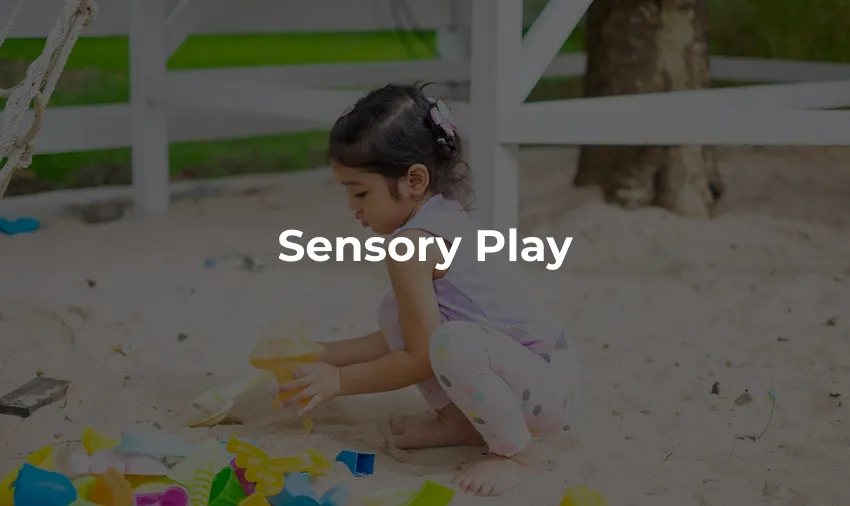
Sensory play refers to such activities that stimulate a child’s senses; touch, sight, smell, taste, hearing, balance and movement. Think of it as learning through exploration. Instead of memorising information, preschoolers feel, squish, pour, shake and experiment their way into understanding the world.
From simple activities for sensory learning like playing with sand to fun sensorial activities for nursery, such as water pouring, sensory play engages young brains in the most natural and meaningful way.
Why Is Sensory Play Important for Preschoolers?
Sensory experiences build the foundation for early learning. Here is how it helps-
1. It Boosts Cognitive Development
When children scoop rice, sort shells or match scents, they are building neural connections. These experiences strengthen problem-solving, memory and concentration.
2. It Promotes Fine Motor Skills
Manipulating objects such as picking beads, squeezing sponges, transferring seeds, improves hand strength and coordination, essential for writing later.
3. It Enhances Language Skills
During sensory activities preschool sessions, children describe what they see, hear or touch. Using new words for description enriches vocabulary naturally.
4. It Supports Emotional Development
Sensory play helps children calm their minds. Activities like kneading dough or playing with water can reduce anxiety, frustration and overstimulation.
5. It Encourages Creativity and Curiosity
No rules. No right answers. Just exploration! That is why sensory play activities encourage children to think independently and imagine freely.
What Are Some Examples of Sensory Play Activities?
Here are fun, practical examples that parents and teachers can try-
1.Water Scooping and Pouring
What do you need?
Cups, bowls, bottles, ladles and a tub of water.
What to do?
Let children scoop, pour and transfer water between containers using different tools. Encourage them to explore speed, quantity and direction.
How does it benefit?
It improves hand–eye coordination, strengthens fine motor skills and teaches early math concepts such as volume, control and precision.
2.Texture Trays
What do you need?
A tray filled with items like rice, sand, cotton balls, leaves, buttons and fabric scraps.
What to do?
Invite children to touch, sort, compare and describe each texture. They can group items, dig through the tray or create tiny patterns.
How does it benefit?
It enhances tactile awareness, sensory exploration, descriptive vocabulary and early categorisation skills.
3. Scent Jars
What do you need?
Small jars filled with items such as cinnamon sticks, lemon peels, cloves, coffee grounds or mint leaves.
What to do?
Ask children to smell each jar and guess the scent. They can match scents to pictures, stories or seasonal themes.
How does it benefit?
Develops olfactory senses, builds vocabulary and strengthens memory and identification skills.
4. Sound Shakers
What do you need?
Small sealed bottles filled with beads, lentils, rice or tiny bells.
What to do?
Children shake, compare and experiment with each bottle to observe how different materials create different sounds.
How does it benefit?
It improves auditory discrimination, rhythm awareness and early musical appreciation. It also refines motor control.
5. Sensory Walks
What do you need?
A simple path made with grass, foam, pebbles, bubble wrap, cloth pieces or sand.
What to do?
Let children walk barefoot across the textured path. They can step slowly, jump, compare surfaces or play follow-the-leader.
How does it benefit?
Boosts balance, body awareness, gross motor skills and spatial understanding. Also helps children become more mindful of sensations.
Each example fits beautifully into sensory activities for kindergarten, helping young learners engage deeply and joyfully.
How Do Sensory Activities Support School Readiness?
Preschoolers who engage in routine sensory experiences show-
- Better attention spans
- Stronger pre-writing skills
- Increased confidence in problem-solving
- Better self-regulation
- Improved communication
These competencies prepare children for structured learning environments such as corporate schools in Hyderabad and globally aligned institutions.
How Does Sensory Play Work in Cambridge and IGCSE-Based Schools?
Modern educational systems prioritise experiential learning. In Cambridge curriculum schools in Hyderabad and top IGCSE schools in Hyderabad, sensory-rich learning is integrated through-
- Discovery corners
- Hands-on science experiences
- Outdoor learning environments
- Multi-sensory storytelling
- Inquiry-driven classroom activities
These support the development of global citizens who think critically and express confidently from preschool itself.
How Can Teachers Incorporate Sensory Play in Daily Learning?
Here are some effective strategies-
- Start with Simple Materials
- Encourage Independent Exploration
- Give children time to play freely without step-by-step instructions.
- Add Language to the Experience
How Does Glendale Bring Sensory Learning to Life?
It is important to highlight why Glendale excels in nurturing curious, confident learners. Being among the most trusted good international schools in Hyderabad, Glendale integrates sensory experiences into everyday learning.
Here is what makes Glendale exceptional-
- Classrooms designed with exploration zones
- Outdoor learning spaces that stimulate all senses
- Teachers trained in global, child-centred methodologies
- A curriculum inspired by international best practices
- Inquiry-based learning aligned with the Cambridge and IGCSE frameworks
At Glendale, sensory play is not an activity; it is a way of learning, thinking and discovering. Children engage with concepts, materials and the world around them through meaningful, multi-sensory experiences that shape strong cognitive, emotional and social foundations.