One of the best ways of learning something better is by watching someone do the same task and try and imitate it. You can either do it for yourself or in the process of explaining to someone else. This whole process has a name: the SECI Model. The model was initially designed for workplace efficiency, so employees could share their expertise. But it also explains something simpler: how children pick up concepts and ideas in school every single day. This glossary provides a deep dive in to the SECI Model and how it influences your child’s learning.
What Is the SECI Model?
The SECI Model was created by two thinkers named Ikujiro Nonaka and Hirotaka Takeuchi. It is a model of knowledge management that helps understand how knowledge transfers from one person to a whole group of people. SECI has four major steps:
- Socialisation
- Externalisation
- Combination
- Internalisation
These four steps work in a circle and not in a straight line. Knowledge starts from one end, gets shared with others and then becomes a deep understanding again. This circle of knowledge sharing happens in a classroom as well, even if people are not familiar with the model.
Important Terms in the SECI Model
- Tacit Knowledge: This knowledge you possess but is difficult to explain in theory due to the practical nature of the topic in discussion. For example: riding a bike or knowing your friend is upset from the expressions on their face. You just know how but expressing it in words is a hard task.
- Explicit Knowledge: This is knowledge that is already written down or explained clearly, like on a textbook, worksheet or defined classroom rules. They are easy to transfer since they are already documented from before.
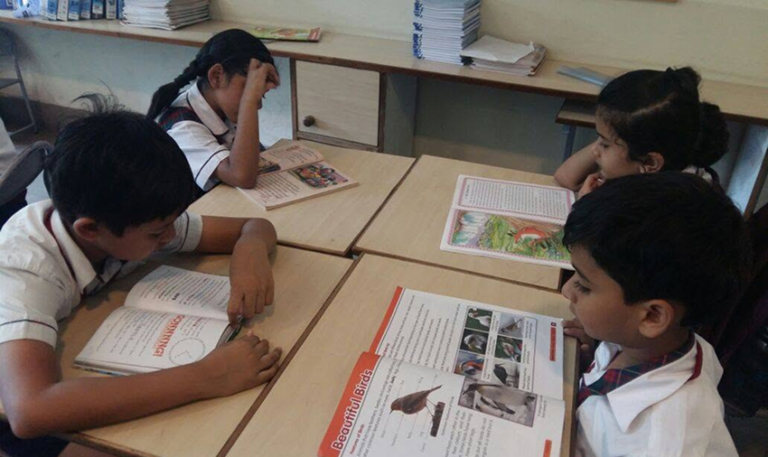
- Socialisation (Tacit to Tacit): This means learning through observation and imitation. When you watch someone doing something such as observing your teacher conduct a science experiment and then imitating it to get the exact result is known as socialisation.
- Externalisation (Tacit to Explicit): This happens when a student converts their own understanding regarding a subject into words or pictures. When a child says “here is why this answer works,” not just “here is the answer,” they are doing externalization.
- Combination (Explicit to Explicit): This refers to gathering different pieces of written material together to make something. ‘
- Internalisation: This happens when a student practices something so many times that it starts coming naturally to them like a second nature.
- Ba(Shared Learning Space): This is a Japanese word which means “place”. It refers to the space where learning and sharing of knowledge occurs like in a classroom, group project or even a conversation between two students.
- Knowledge Spiral: This is the awareness that all key stages of SECI (Socialisation, Externalisation, Combination and Internalisation) does not happen just once. It is a repetitive model and each time the understanding gets deeper than the last.
- Knowledge-Creating School: This a school that plans lessons carefully so there is space for all the key steps of the SECI Module takes place on purpose and not accidentally. Teachers structure their teaching plan with space for watching, explaining, connecting ideas and practising.
How Does the SECI Model Improve Student Learning?
Using the SECI model of knowledge management in class changes how lessons are planned and not just how they are taught.
- Group work and peer learning support Socialisation. Students learn from each other and not just from their teachers and textbooks
- Presentations and class discussions support Externalisation. Students put their own ideas into words that are easily comprehensible to the other students.
- Projects that mix different subjects support Combination. Students connect maths, science and language instead of separating them into different boxes.
- Hands-on practice supports Internalisation. Practical experience creates a lasting impression making it easier for students to understand better and remember it for a longer period of time.
When a school uses all four steps every day, students do not just receive facts to remember. They build real understanding, and that kind of learning stays with them for a very long time, long after the school bell rings.
Concepts like the SECI Model prove to be the most effective if applied in the daily school practice. Schools like Glendale have adopted a similar approach in its Suncity, Financial District, and Tellapur campuses located in Hyderabad. In this school, teachers exchange ideas, children work in groups, and challenges are discussed regularly and not only during exams. Many major international schools in Hyderabad, such as Glendale School, introduce CBSE, Cambridge, and IB PYP teaching methods while instilling the spirit of cooperation and development at its campuses. If you are interested in finding out about schools in Suncity Hyderabad or schools in Tellapur, you will discover the same approach to learning implemented by Glendale School.