Do you remember your child’s first word, or the first thoughtful question that stops you dead in your tracks? Especially the kind that you wouldn’t expect from a 5-year-old. In those early years, something truly extraordinary is brewing inside your child’s brain.
From the moment your child is born, their brain is forming up to one million new connections every second. These connections are built in direct response to the world around them. And by the time they hit the late elementary years, they are navigating friendships, falling-out and figuring out who they are, and quietly deciding where they belong in the world.
We’ve crafted a sincere guide for all the parents who want to understand the importance of Early Childhood Education, what it actually does for their child and why those early years matter more than people realise.
Understanding Early Childhood Education
To understand the basics of Early Childhood Education, it helps to start with what it actually covers. Early Childhood Education, or ECCE (Early Childhood Care and Education) in India, covers your child’s learning and development from birth to around eight years of age. In practice, the most important window is three to six years, the years before formal schooling begins.
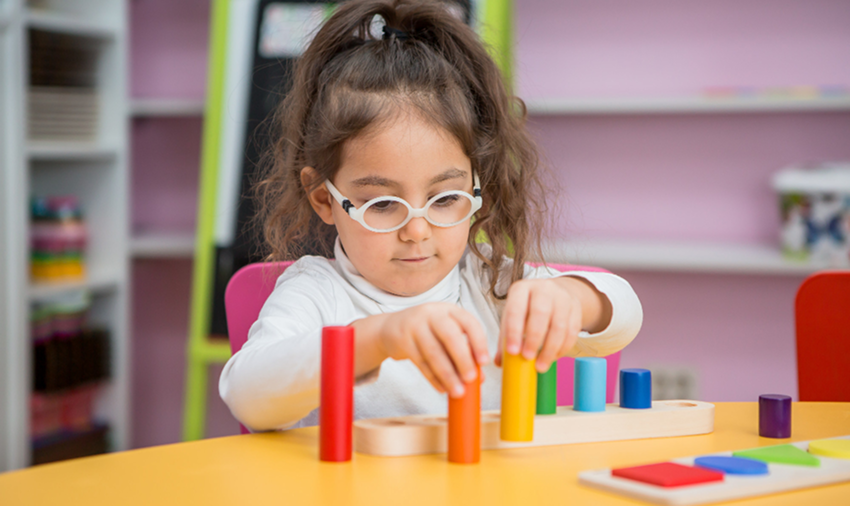
A good early childhood education approach isn’t simply keeping the child busy. It is play-based, curiosity-driven, and focused on the whole child.
What are the real benefits of early childhood education?
Early childhood education is not about accelerating a child’s development or pushing academics earlier. It is about providing the right experiences at the right time and experiences that the brain is primed to absorb and build upon. The benefits are wide-ranging and well-documented.
It builds confidence
A child who has been in a warm, nurturing early learning environment knows, at a gut level, that they are capable. That experience of being safe enough to fail is what builds genuine confidence. Not the confidence that needs constant reassurance, but the kind that enters quietly and adapts.
Teaches your child how to interact with other people
Sharing, taking turns, and asking instead of grabbing. These may sound simple for a young child, but they are genuinely hard. Early childhood programmes give children their first structured practice at navigating relationships outside the family. And the social skills developed in those early years directly influence friendships, classroom behaviour and even workplace relationships decades later.
It builds a relationship with learning
If your child is in an environment that celebrates their curiosity, welcomes their questions, and makes learning feel joyful, they will arrive at school with an invaluable sense of belonging. Being one of the top pre-schools in Hyderabad, Glendale Academy is built exactly around this philosophy, that a child who loves learning early will carry that love forward.
It introduces language in a unique way
The early childhood years are the prime window for language development. Children who are surrounded by rich conversation, stories, songs, and questions develop significantly stronger vocabulary and communication skills. This is not just about being articulate; when your child’s language skills improve, everything else will naturally follow. Reading gets easier, their understanding deepens, and their academic performance improves with it.
Lasting Benefits
The numbers usually tell a story, and understanding the importance of early childhood development aligns with it. Pre-primary enrollment among three-year-olds rose from 68.1% to 75.8% between 2018 and 2022, and it continues to grow. It became evident that children who receive early childhood education are more likely to stay enrolled in school, enjoy the learning process, and be better prepared for higher education.
Signs your child is thriving in Early Education
When your child is genuinely benefiting from the programme, there will be signs that cannot be ignored.
- They are excited to go to school. When your young one is well matched with the early learning environment, they’ll be truly keen about it, not anxious or clingy every morning.
- Their curiosity and inquisitiveness are not held back. More questions and more observations are clear indications that your child is learning to think.
- Their ability to navigate friendships, small conflicts, resolutions and tiny acts of kindness, each of these is a little proof that growth is already underway.
- They treat mistakes as a part of progress, not proof of failure. That calm understanding and ease of getting things wrong are a consequence of realising that being wrong is part of the process of figuring things out.
- They bring learning home. They want to show you something, tell you something and try something again.
All these show that early childhood education should feel like joy, not pressure. If it does not, the environment may not be the right fit. At Glendale Academy, one of the leading schools in Hyderabad, every early years classroom is designed to make learning feel exactly like that, joy.
How to choose the right Early Childhood Programme?
If you are currently exploring admission in preschool for your child, here is a simple framework for evaluating:
What to look for | Why it matters | Ask the school |
Play-based learning | Children this age learn through exploration, not just instruction | Is the day structured around play and discovery? |
Warm, trained teachers | The relationship between the teacher and child shapes everything. | What is the teacher’s background in Early Childhood Education? |
Small size classes | A optimum student teacher ratio is important for good attention | What is the student teacher ratio? |
A safe stimulating space | Children need to feel safe before they can feel curious | Is the classroom atmosphere welcoming and a nurturing place? |
Parent communication | Home and school working together makes a real difference | How does the school keep you involved in your child’s progress? |
Among the best international schools in Hyderabad, Glendale Academy meets each of these markers with trained early years educators, thoughtfully designed spaces and a genuine commitment to partnering with parents through every stage of their child’s growth.
Wrapping up
The first few years of your child’s life are the most consequential. From birth, their brains form connections at a remarkable pace, making this window a significant period for learning, growth, and development. What happens in those first few years, the conversations, the play, the questions, the small failures and the victories shape their growth far more than you give credit for.
A good early childhood education gives your child the right experiences at the right time. Building confidence and teaching them how to navigate friendships, handle mistakes without fear and arrive at school already in love with learning. If your child is in an environment that makes learning feel like joy, you are already doing something right. And if you are still looking for that environment, Glendale Academy might just be where that journey begins.
FAQs
Play-based, social early learning is appropriate from around age 3. Before that, the home environment, conversation, reading aloud, and safe play are the most important early classrooms your child will ever have.
Look for a warm, attentive teacher, a play-based approach, and a child who comes home happy and talking. A good early childhood programme should feel like joy, not performance.
Yes, and the evidence is quite clear on that. ASER data consistently show that children with pre-primary education arrive at school better prepared to learn and perform better in the early grades.