
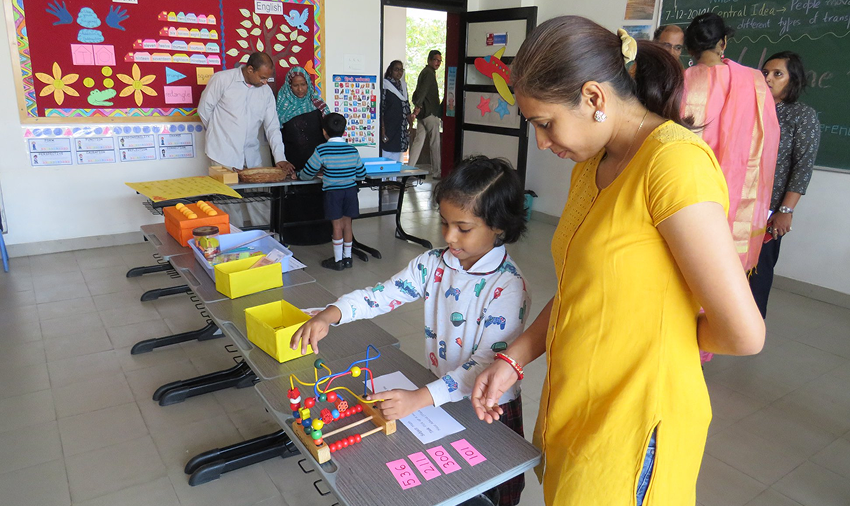
If you have ever wondered, “How do I help my child think smarter, faster and more creatively,” you are not alone. In a world that is changing faster than ever, strong problem-solving skills are absolutely essential.
Whether students are navigating academic learning or real-life situations, the ability to think critically, analyse information and make sound decisions will shape their future success.
So let us dive into a fun, practical and effective guide on how to help students learn problem-solving the right way. Explore the research-backed strategies and the nurturing environment offered at Glendale, one of the best Cambridge schools in Hyderabad.
What Are Problem-Solving Skills?
What are problem-solving skills exactly?
They are a mix of competencies students use to identify challenges, explore options and arrive at logical solutions. Some popular examples of problem-solving skills include:
- Analytical thinking
- Creativity
- Decision-making
- Logical reasoning
- Evaluation and reflection
- Collaboration and communication
Teaching these abilities early helps students develop the foundation for critical thinking and problem-solving in academics and beyond.
Why Are Problem-Solving Skills So Important for Students?
Simply put: problem solvers become independent thinkers.
With strong skills, students can-
- Break down complex tasks
- Approach challenges with confidence
- Work effectively in teams
- Think creatively instead of memorising answers
- Adapt to new situations with ease
For learners at IGCSE schools in Hyderabad, India, these abilities are especially vital. This ensures that the inquiry-driven curricula expect students to think, question and explore and not just follow instructions.
How to Improve Problem-Solving Skills in Students?
Let us break it down into steps that parents and teachers can use right away.
1. Ask More Open-Ended Questions
Questions such as:
- Why do you think this happened?
- What else could we try?
These questions help students analyse situations instead of rushing to answers. This encourages deeper thought and improves problem-solving methods.
2. Use Real Life Challenges
Turn everyday situations into learning opportunities. Encourage them for-
- Planning a picnic
- Organising a group activity
- Fixing a minor household issue
These are simple but powerful problem-solving activities for students that build confidence while keeping learning fun.
3. Teach Them to Break Down Problems
Help students divide challenges into smaller chunks. Encourage them to solve one problem at a time to boost their confidence.
This teaches structured thinking and makes even complex tasks manageable.
4. Encourage Brainstorming (No Wrong Answers!)
Create a safe and positive space where all ideas are welcome.
Brainstorming helps develop creativity and shows students that every solution begins with imagination.
5. Let Them Fail Safely
Failure is part of the process.
When students reflect on what went wrong and what can be improved, they sharpen both critical thinking and problem-solving.
6. Use Games & Puzzles
Be it chess, Sudoku, coding games or escape-room challenges; these are fantastic ways to help students learn problem-solving while enjoying themselves.
7. Support Collaborative Learning
Group tasks help students learn to negotiate, listen, share ideas and find collective solutions. These are crucial elements of modern problem-solving methods.
8. Integrate Digital Tools
Apps, simulation games and learning platforms enhance engagement and expose students to analytical thinking in interactive ways.
How Glendale Builds Strong Problem-Solvers?
Glendale stands out among international schools in Nallagandla and the top IGCSE schools for its commitment to holistic and future-ready learning.
Here is how Glendale nurtures powerful problem-solving skills:
1. Inquiry-Based Classrooms
Students are encouraged to question, investigate and explore concepts deeply.
2. Integrated Cambridge Curriculum
As one of the best Cambridge schools, Glendale uses global frameworks that naturally build analytical and reasoning abilities.
3. Experiential Learning Modules
Projects, experiments and real-world simulations ensure students practise problem-solving activities regularly.
4. Life Skills & Leadership Programmes
Glendale’s programmes help students apply examples of problem-solving skills in scenarios that mirror real life.
5. Supportive Teachers Who Mentor
Educators act as guides, ensuring every learner grows confidently and independently.
Final Thoughts
Improving problem-solving skills is not about giving students the right answers; it is about teaching them how to think. With the right guidance, engaging activities and a supportive school environment, every child can grow into a confident and creative problem solver.
Glendale’s innovative learning culture, global curriculum and focus on real-world skill-building make it the perfect choice for parents seeking a future-ready education. At Glendale, students don’t just learn; they explore, discover and evolve into thinkers and leaders of tomorrow.
FAQ
How early should students start learning problem-solving skills?
Students can begin as young as preschool. Early exposure to puzzles, play-based challenges and conversational questioning helps lay the groundwork for lifelong learning.
What are the simplest problem-solving methods for school-going children?
Start with identifying the problem, brainstorming solutions, choosing the best option and evaluating the outcome. Glendale incorporates this into classroom routines naturally.
Do problem-solving activities for students really help with academics?
Absolutely! Activities enhance logic, reasoning and comprehension skills that boost performance in science, maths, language and beyond.
How does problem-solving relate to confidence-building?
Every time students solve a problem independently, they become more self-assured. Glendale’s supportive environment strengthens this confidence through hands-on challenges.