


Key Takeaways
|
Choosing your child’s first learning environment can feel surprisingly overwhelming, especially with two popular approaches, Montessori and play-based programme, both claiming to offer the best foundation for early learning. Here is a clear, practical way to tell them apart and decide which one suits your child.
Montessori education is built around self-directed, hands-on activities using specially designed learning materials, usually in mixed-age classrooms where children progress at their own individual pace rather than a fixed group timetable.
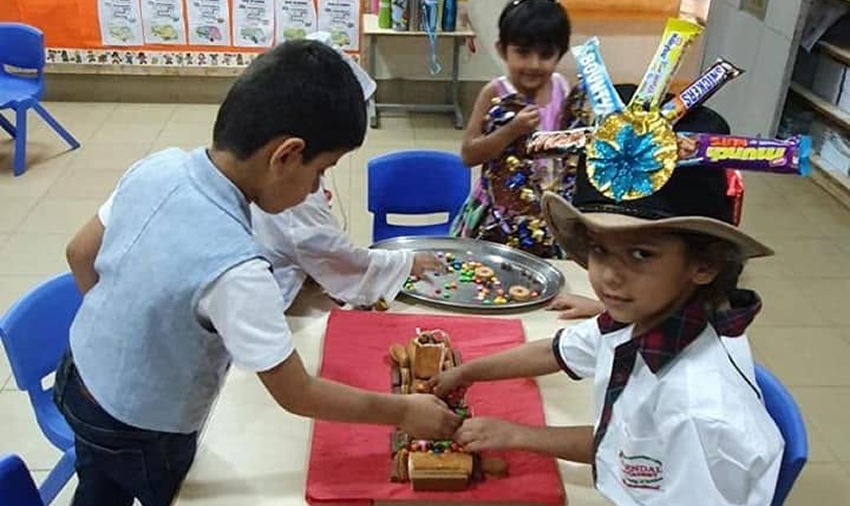
Play-based learning takes a more flexible route, using unstructured and guided play to build early skills through imagination, social interaction, and hands-on exploration, usually within same-age peer groups.
In a well-run play-based preschool, this flexibility does not mean a lack of structure behind the scenes, since teachers still plan carefully toward specific developmental goals through the activities they design.
|
Aspect |
Montessori |
Play-Based |
|
Structure |
Structured, self-paced individual work |
Flexible, group-oriented free play |
|
Materials |
Specific Montessori-designed materials |
Varied toys, props, and open-ended materials |
|
Teacher’s role |
Guide, observes and steps in minimally |
Facilitator, actively joins and extends play |
|
Classroom |
Usually mixed-age |
Usually same-age peer groups |
|
Best suited for |
Children who enjoy independent, focused tasks |
Children who thrive on social interaction and imaginative play |
A child who is naturally methodical, enjoys working alone, and likes repeating a task until it feels right often flourishes in a Montessori preschool setting. A child who lights up around other children and loves storytelling, dress-up, and group games often does better in a lively play-based environment. Both approaches, done well, build a genuinely strong foundation in pre-primary education.
NEP 2020 sets a national goal of universal, quality early childhood education for children aged 3 to 6 by 2030, recognising this stage as the foundation for later literacy, numeracy, and life skills. Parental choice has also expanded dramatically to support this goal, with research citing Ministry of Women and Child Development data pointing to close to 300,000 private preschools operating across the country, giving families far more options than a generation ago.
Seeing the two approaches side by side in practice, rather than only on paper, often makes the choice much clearer.
|
Time of Day |
Montessori Classroom |
Play-Based Classroom |
|
Morning welcome |
Children choose an individual work activity from the shelf |
Children join a circle time song or story together |
|
Core session |
Focused, self-paced practical or sensorial work |
Rotating activity corners such as art, blocks, and pretend play |
|
Outdoor time |
Independent or small-group nature exploration |
Group games and guided physical play |
|
Wrap-up |
Quiet reflection and putting away materials |
Group discussion about what was made or discovered |
If you are exploring international schools in Hyderabad or specifically shortlisting pre primary schools in Hyderabad, ask how the early years programme connects to what comes next, such as a structured IB Primary Years pathway, so your child’s foundation carries forward smoothly rather than starting over at every stage.
A brief visit can tell you far more than any prospectus, as long as you know what to look for and ask beyond the standard tour. Coming prepared with a few specific questions helps you compare programmes fairly rather than relying on first impressions alone.
A methodical child who loves working alone and mastering tasks will often flourish in a Montessori environment where independence is celebrated and materials are specific. A socially spirited child who lights up around others and thrives on imaginative play will likely blossom in a vibrant play-based classroom where flexibility and group interaction are the norm. Both, when genuinely well-run, build strong foundations in independence, curiosity, and the love of learning.
To see the approach in action, visit Glendale International school to observe how children engage and discover whether our environment suits your child’s needs. Book a campus tour or enquire now.
Key Takeaways
|
Children are extraordinary learners. Long before they can tie their own shoelaces, they can pick up a new language just from hearing it spoken around them, recognise patterns, and ask why about nearly everything they see, often within what feels like a jiffy compared to how long it takes adults to learn something new. This is not a coincidence; it is biology. The first six years of a child’s life are when the brain develops faster than at any other point in a lifetime, which is exactly why early childhood education deserves so much of your attention well before your child ever steps into a formal classroom.
According to the National Curriculum Framework for the Foundational Stage, developed by NCERT under NEP 2020, quality early childhood care and education directly shapes brain development, school readiness, and long-term learning outcomes, making this one of the most critical stages in a child’s education. This is the period when neural connections form at their fastest rate, and the experiences a child has – conversations, play, exploration- are what determine which of those connections strengthen.
NEP 2020 sets a clear national goal: universal provisioning and quality early childhood care and education for children aged 3 to 6 by 2030. Progress toward this goal is already visible. By 2024, close to 80 per cent of India’s rural three-year-olds and close to 85 per cent of four-year-olds were enrolled in some form of early childhood programme, according to Annual Status of Education Report data, reflecting how seriously this stage is now being treated nationally.
|
Age Range |
Stage |
Where Learning Typically Happens |
|
0 to 3 years |
Early home-based care |
Primarily at home, with parents and caregivers |
|
3 to 6 years |
Early childhood education |
Anganwadis, playschools, and pre-primary or nursery to KG classes |
|
6 to 8 years |
Foundational Stage (early primary) |
Grade 1 and Grade 2 in formal school |
The National Curriculum Framework for the Foundational Stage outlines several curricular domains that together define healthy child development in these early years.
A longitudinal study covering roughly 14,000 children across Assam, Rajasthan, and Telangana found that preschool participation in the early years had a considerable impact on children’s school readiness, with those exposed to structured cognitive activities scoring notably better on later readiness assessments. Separately, ASER’s 2020 findings pointed to a clear relationship between a child’s early cognitive skills and their later performance in language and numeracy tasks, reinforcing just how much early years development shapes the years that follow.
Most educators agree that play remains central at this age. The NCF Foundational Stage document describes learning as progressing from play and exploration in young children toward more specialised modes of inquiry as they grow older, with play-based learning fostering the perceptual and practical understanding that formal instruction alone cannot. This is also the philosophy behind globally recognised approaches such as the IB Primary Years Programme, which builds structured inquiry directly on top of a child’s natural curiosity.
While enrolment numbers are encouraging, access to quality early years provision remains uneven across the country. Government-run Anganwadi centres remain the largest network delivering early childhood care and education, currently reaching an estimated 47 to 49 per cent of the eligible population, while research using UDISE+ data shows only about 30 per cent of primary schools in India have a dedicated pre-primary section at all, with roughly two-thirds of children attending pre-primary classes doing so in private unaided schools.
|
Provider Type |
Approximate Share of Pre-Primary Enrolment |
|
Government Anganwadi centres |
Around 47 to 49 percent of the eligible population |
|
Private unaided schools |
Roughly two in every three children in formal pre-primary classes |
|
Government and aided schools |
The remaining share, concentrated mainly in rural areas |
This is precisely why the choice of preschool or early years programme carries so much weight for families who do have options, since quality and consistency still differ meaningfully across providers.
When you begin exploring international schools in Hyderabad for your child’s earliest years, look beyond bright classrooms and ask about the everyday philosophy. At Glendale, this shows up in spaces such as the Life Skills Studio, where children practise age-appropriate, experiential tasks like bed-making, table setting, tying shoelaces, and even simple habits like saving electricity, alongside a structured preschool admission process that helps families transition smoothly into formal schooling.
The first six years are not a phase to rush through. It’s a period of rapid brain development in your kid’s life, where they learn to explore, experience new things and make connections that will support all future learning. This is why choosing quality early childhood care and education deserves careful attention.
At Glendale Academy, we understand this science. Our early years programme integrates structured cognitive activities with play-based learning, Life Skills Studios for practical development, and a thoughtfully designed admission process that ensures every child transitions smoothly into formal schooling with confidence and curiosity intact. Visit the Glendale campuses or enquire to see how we nurture the whole child during these critical years.