

Key Takeaways
|
Choosing your child’s first learning environment can feel surprisingly overwhelming, especially with two popular approaches, Montessori and play-based programme, both claiming to offer the best foundation for early learning. Here is a clear, practical way to tell them apart and decide which one suits your child.
Montessori education is built around self-directed, hands-on activities using specially designed learning materials, usually in mixed-age classrooms where children progress at their own individual pace rather than a fixed group timetable.
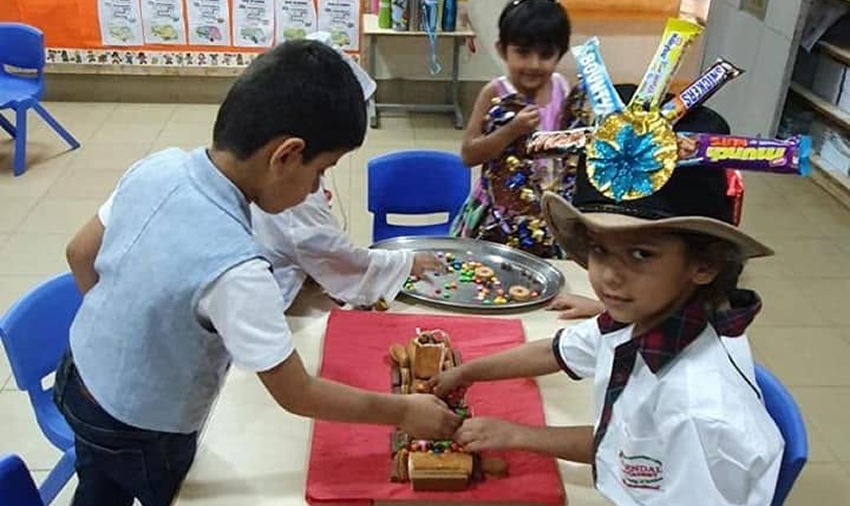
Play-based learning takes a more flexible route, using unstructured and guided play to build early skills through imagination, social interaction, and hands-on exploration, usually within same-age peer groups.
In a well-run play-based preschool, this flexibility does not mean a lack of structure behind the scenes, since teachers still plan carefully toward specific developmental goals through the activities they design.
|
Aspect |
Montessori |
Play-Based |
|
Structure |
Structured, self-paced individual work |
Flexible, group-oriented free play |
|
Materials |
Specific Montessori-designed materials |
Varied toys, props, and open-ended materials |
|
Teacher’s role |
Guide, observes and steps in minimally |
Facilitator, actively joins and extends play |
|
Classroom |
Usually mixed-age |
Usually same-age peer groups |
|
Best suited for |
Children who enjoy independent, focused tasks |
Children who thrive on social interaction and imaginative play |
A child who is naturally methodical, enjoys working alone, and likes repeating a task until it feels right often flourishes in a Montessori preschool setting. A child who lights up around other children and loves storytelling, dress-up, and group games often does better in a lively play-based environment. Both approaches, done well, build a genuinely strong foundation in pre-primary education.
NEP 2020 sets a national goal of universal, quality early childhood education for children aged 3 to 6 by 2030, recognising this stage as the foundation for later literacy, numeracy, and life skills. Parental choice has also expanded dramatically to support this goal, with research citing Ministry of Women and Child Development data pointing to close to 300,000 private preschools operating across the country, giving families far more options than a generation ago.
Seeing the two approaches side by side in practice, rather than only on paper, often makes the choice much clearer.
|
Time of Day |
Montessori Classroom |
Play-Based Classroom |
|
Morning welcome |
Children choose an individual work activity from the shelf |
Children join a circle time song or story together |
|
Core session |
Focused, self-paced practical or sensorial work |
Rotating activity corners such as art, blocks, and pretend play |
|
Outdoor time |
Independent or small-group nature exploration |
Group games and guided physical play |
|
Wrap-up |
Quiet reflection and putting away materials |
Group discussion about what was made or discovered |
If you are exploring international schools in Hyderabad or specifically shortlisting pre primary schools in Hyderabad, ask how the early years programme connects to what comes next, such as a structured IB Primary Years pathway, so your child’s foundation carries forward smoothly rather than starting over at every stage.
A brief visit can tell you far more than any prospectus, as long as you know what to look for and ask beyond the standard tour. Coming prepared with a few specific questions helps you compare programmes fairly rather than relying on first impressions alone.
A methodical child who loves working alone and mastering tasks will often flourish in a Montessori environment where independence is celebrated and materials are specific. A socially spirited child who lights up around others and thrives on imaginative play will likely blossom in a vibrant play-based classroom where flexibility and group interaction are the norm. Both, when genuinely well-run, build strong foundations in independence, curiosity, and the love of learning.
To see the approach in action, visit Glendale International school to observe how children engage and discover whether our environment suits your child’s needs. Book a campus tour or enquire now.

Key Takeaways
|
Children are extraordinary learners. Long before they can tie their own shoelaces, they can pick up a new language just from hearing it spoken around them, recognise patterns, and ask why about nearly everything they see, often within what feels like a jiffy compared to how long it takes adults to learn something new. This is not a coincidence; it is biology. The first six years of a child’s life are when the brain develops faster than at any other point in a lifetime, which is exactly why early childhood education deserves so much of your attention well before your child ever steps into a formal classroom.
According to the National Curriculum Framework for the Foundational Stage, developed by NCERT under NEP 2020, quality early childhood care and education directly shapes brain development, school readiness, and long-term learning outcomes, making this one of the most critical stages in a child’s education. This is the period when neural connections form at their fastest rate, and the experiences a child has – conversations, play, exploration- are what determine which of those connections strengthen.
NEP 2020 sets a clear national goal: universal provisioning and quality early childhood care and education for children aged 3 to 6 by 2030. Progress toward this goal is already visible. By 2024, close to 80 per cent of India’s rural three-year-olds and close to 85 per cent of four-year-olds were enrolled in some form of early childhood programme, according to Annual Status of Education Report data, reflecting how seriously this stage is now being treated nationally.
|
Age Range |
Stage |
Where Learning Typically Happens |
|
0 to 3 years |
Early home-based care |
Primarily at home, with parents and caregivers |
|
3 to 6 years |
Early childhood education |
Anganwadis, playschools, and pre-primary or nursery to KG classes |
|
6 to 8 years |
Foundational Stage (early primary) |
Grade 1 and Grade 2 in formal school |
The National Curriculum Framework for the Foundational Stage outlines several curricular domains that together define healthy child development in these early years.
A longitudinal study covering roughly 14,000 children across Assam, Rajasthan, and Telangana found that preschool participation in the early years had a considerable impact on children’s school readiness, with those exposed to structured cognitive activities scoring notably better on later readiness assessments. Separately, ASER’s 2020 findings pointed to a clear relationship between a child’s early cognitive skills and their later performance in language and numeracy tasks, reinforcing just how much early years development shapes the years that follow.
Most educators agree that play remains central at this age. The NCF Foundational Stage document describes learning as progressing from play and exploration in young children toward more specialised modes of inquiry as they grow older, with play-based learning fostering the perceptual and practical understanding that formal instruction alone cannot. This is also the philosophy behind globally recognised approaches such as the IB Primary Years Programme, which builds structured inquiry directly on top of a child’s natural curiosity.
While enrolment numbers are encouraging, access to quality early years provision remains uneven across the country. Government-run Anganwadi centres remain the largest network delivering early childhood care and education, currently reaching an estimated 47 to 49 per cent of the eligible population, while research using UDISE+ data shows only about 30 per cent of primary schools in India have a dedicated pre-primary section at all, with roughly two-thirds of children attending pre-primary classes doing so in private unaided schools.
|
Provider Type |
Approximate Share of Pre-Primary Enrolment |
|
Government Anganwadi centres |
Around 47 to 49 percent of the eligible population |
|
Private unaided schools |
Roughly two in every three children in formal pre-primary classes |
|
Government and aided schools |
The remaining share, concentrated mainly in rural areas |
This is precisely why the choice of preschool or early years programme carries so much weight for families who do have options, since quality and consistency still differ meaningfully across providers.
When you begin exploring international schools in Hyderabad for your child’s earliest years, look beyond bright classrooms and ask about the everyday philosophy. At Glendale, this shows up in spaces such as the Life Skills Studio, where children practise age-appropriate, experiential tasks like bed-making, table setting, tying shoelaces, and even simple habits like saving electricity, alongside a structured preschool admission process that helps families transition smoothly into formal schooling.
The first six years are not a phase to rush through. It’s a period of rapid brain development in your kid’s life, where they learn to explore, experience new things and make connections that will support all future learning. This is why choosing quality early childhood care and education deserves careful attention.
At Glendale Academy, we understand this science. Our early years programme integrates structured cognitive activities with play-based learning, Life Skills Studios for practical development, and a thoughtfully designed admission process that ensures every child transitions smoothly into formal schooling with confidence and curiosity intact. Visit the Glendale campuses or enquire to see how we nurture the whole child during these critical years.
Key Takeaways
|
If you are a parent trying to choose between CBSE, IB DP and Cambridge, you are not alone. It is one of the biggest decisions you will make for your child, and it can feel confusing because every school, relative, and neighbour seems to have a different opinion. This page is written to help you think it through calmly. We will walk you through what each curriculum in education actually means in the classroom, how they compare on structure, assessment and university pathways, and how to match a curriculum to your child’s own learning style rather than to trends or peer pressure.
There is a lot of information out there, and much of it is written to sell a particular board rather than to help you think clearly. This page is different. As a school offering CBSE, IB DP and Cambridge across our campuses, we do not have a reason to push you towards one over another. What we do want is for you to walk away understanding what each board asks of a child day-to-day so that whatever you choose, you choose it for the right reasons and with real clarity about what lies ahead.
Before comparing them, it helps to know what each one is.
CBSE, or the Central Board of Secondary Education, is India’s largest national board, followed by government and private schools across the country.
IB DP, the International Baccalaureate Diploma Programme, is a two-year pre-university course taught in grades 11 and 12 at IB World Schools worldwide.
Cambridge, run by Cambridge International, covers primary through senior secondary levels and leads into IGCSE and A Levels.
Every curriculum in education is really just a framework: what is taught, how it is taught, and how learning is assessed. The differences between CBSE, IB DP and Cambridge come down to how much weight each one places on syllabus coverage versus inquiry versus applied skill building.
It also helps to know where each board sits in a child’s schooling journey. CBSE runs continuously from the early years through Class 12, so a family rarely needs to change schools purely because of the curriculum. Cambridge follows a similar continuous structure, moving from Primary through Lower Secondary into IGCSE and A Levels. IB DP, on the other hand, is only offered in the final two years of school, which means many families first choose a school for its earlier IB programmes, the Primary Years and Middle Years Programme, before committing to the Diploma itself. Understanding this timeline early makes the later comparison much easier to follow.
The CBSE curriculum is built around a fixed national syllabus, continuous internal assessment, and board examinations at Class 10 and Class 12. Its biggest strength for Indian families is alignment: because so many entrance exams are set to the CBSE syllabus, students rarely need a separate track of preparation. Careers360 reports that although CBSE schools make up only around 11 percent of senior secondary schools in India, they account for close to 59 percent of top-scoring JEE Main candidates, and CBSE affiliations have grown by roughly 25 percent since 2018. That kind of exam alignment is exactly why so many parents comparing boards start their research with CBSE, as we discuss in more depth in our blog on how to choose between CBSE, IB, ICSE and Cambridge. The trade-off is that CBSE classrooms can lean more towards syllabus completion than open-ended exploration, which suits children who prefer structure and clear targets over independent research.
The IB DP curriculum asks students to study six subject groups alongside three core elements: Theory of Knowledge, the Extended Essay, and Creativity, Activity, Service. Rather than testing recall, it assesses how well a student can research, argue, and reflect. Classrooms are discussion-heavy, and students are expected to ask questions rather than simply absorb answers. We go into this in detail in our blog on the benefits of an IB education. This approach suits a child who is naturally curious and does not mind extra writing and project work, but it can feel demanding for a child who prefers a lighter, more predictable workload. It is worth noting that the number of IB World Schools in India has grown fast, from 183 in 2019 to over 255 by 2025, a shift that reflects rising parent confidence in the programme.
The Cambridge curriculum sits between the two, structured enough to give students clear learning goals, yet flexible enough to let them choose subject combinations that match their interests. Cambridge programmes are now used in over 10,000 schools across 160 countries, as recent exam data shows, making it one of the most widely used international frameworks anywhere. Assessment combines structured written exams with coursework, which appeals to students who enjoy logical reasoning and want a balance between depth and flexibility. This growing demand is one reason why best Cambridge Schools in Gachibowli has become a common search term among families in the western part of the city. You can read more about the programme’s global standing in our blog on 5 reasons to choose the Cambridge International programme.
Here is a side-by-side look at how the three boards differ on the things parents ask about most.
Feature | CBSE | IB DP | Cambridge |
Teaching style | Textbook and syllabus-led | Inquiry and concept-led | Application and skills-led |
Assessment pattern | Board exams plus periodic tests | Internal assessments, extended essay, exams | Coursework and structured written exams |
Subject choice | Stream-based from Class 11 (Science, Commerce, Humanities) | Six subject groups plus core (TOK, EE, CAS) | Flexible pick and mix across subject groups |
Workload feel | Predictable, exam-focused | Intensive, research and writing heavy | Steady, subject depth over breadth |
The IB vs CBSE question usually comes down to rigour versus flexibility. CBSE offers a familiar, exam-tested path with strong alignment to Indian entrance tests, while IB DP builds research, writing, and presentation skills that many global universities value highly. Families researching IB curriculum in Hyderabad often ask this question because they want the best of both worlds: strong academics and genuine skill building. Our blog on the best international schools in Hyderabad with IB curriculum looks at this in more detail. In practice, the decision often depends less on which board is objectively harder and more on whether your child thrives with defined syllabi or with open-ended inquiry.
For families who have already decided on an international pathway, IB vs Cambridge becomes the real question. Both are globally recognised, and both build 21st-century skills such as collaboration and independent research, but they reach those outcomes differently. IB asks students to connect ideas across subjects through its core requirements, while Cambridge lets students go deeper into individually chosen subjects without the extended essay or Theory of Knowledge component. Neither is harder or easier in absolute terms; they simply suit different kinds of learners, a point we unpack fully in our blog on how to choose the right international curriculum, IB vs Cambridge. A simple way to think about it: does your child love exploring ideas and asking questions, or do they prefer structure and defined outcomes?
University pathways matter because school choice today is really a decision about tomorrow. The Association of Indian Universities has recognised the IB Diploma since 1983 as equivalent to Class 12, and more than 5,000 universities across over 100 countries accept the IB Diploma for admission. Cambridge IGCSE and A Level qualifications remain one of the most established routes into UK and Commonwealth universities, while CBSE stays the most direct route into India’s engineering and medical entrance exams. Our blog on why parents are switching from national boards to international curriculums explores this shift in more detail.
Curriculum | Indian university pathway | International university pathway |
CBSE | Directly aligned with JEE, NEET, CUET and most state entrance exams | Accepted widely, though some universities ask for extra proof of English proficiency or subject depth |
IB DP | Recognised by the Association of Indian Universities as equivalent to Class 12 | Recognised by thousands of universities across 100-plus countries |
Cambridge | IGCSE and A Level results are accepted by Indian universities, usually alongside entrance exam scores | A strong, long-established route into UK, European and Commonwealth universities |
It is worth remembering that a curriculum is only one part of the picture. Teaching quality, classroom size, pastoral support and how well a school understands your individual child often matter just as much as the framework on paper. A well-taught CBSE classroom can build as much curiosity as a poorly taught IB one, and the reverse is equally true.
There is no universal best education board, only the board that fits your child best. Start by watching how your child naturally learns. Do they memorise quickly and enjoy structured revision, or do they ask endless questions and want to understand the why behind everything? Consider your family’s mobility too. If you expect to relocate across cities or countries, IB DP or Cambridge may offer smoother transitions than a state-specific pathway. Families evaluating international schools in Hyderabad often shortlist based on campus, faculty, and support systems as much as the curriculum label itself, and our blog on Cambridge IGCSE school admissions in Hyderabad is a useful next step if you are close to a decision.
It also helps to talk to your child directly, especially if they are old enough to have an opinion. Ask them what they enjoyed most in their current classes, whether they prefer working alone or in groups, and how they feel about exams versus projects. Their answers often reveal more about the right fit than any prospectus can.
If you are still weighing your options, this quick guide can help narrow things down. Treat it as a starting point rather than a final answer, since most children show traits from more than one row.
If your child … | This curriculum may fit well |
Wants a clear, well-tested path towards Indian entrance exams | CBSE, with its stream-based structure and exam familiarity |
Enjoys asking questions, research and connecting ideas across subjects | IB DP, built around inquiry, reflection and independent thinking |
Prefers structure, defined outcomes and going deep into fewer subjects | Cambridge, with its flexible subject combinations and steady pace |
May move cities or countries during school years | IB DP or Cambridge, both built for international mobility |
If you are still unsure after going through this guide, that is completely normal. Many parents make the final call only after visiting classrooms, meeting teachers, and seeing how their child responds to each environment in person.
We have linked several related blogs throughout this page, each one going deeper into a specific part of the CBSE, IB DP, and Cambridge comparison, from curriculum structure and admissions to why families are increasingly weighing international options. If a particular section above raised more questions than it answered, the linked blog on that topic is the best place to continue reading.
Every child learns differently, and the right curriculum should work for your child rather than the other way round. If you would like to talk through CBSE, IB DP or Cambridge with our academic counsellors, or see our classrooms in action,
book a campus tour with Glendale School and let our team help you make a well-informed, confident decision for your child’s education.