Have you ever watched your ten-year-old casually navigating three apps simultaneously while holding a conversation? Then, you are already aware that this generation did not come with a guide or manual. With that in mind, they are also inheriting a world that is also faster, more interconnected, and more unpredictable than ever before.
So, the question worth asking is whether your child is not just keeping up but also equipped with the skills to do so. When parents and educators talk about 21st-century skills for students, they mean precisely this. In this blog, we explore five essential 21st-century skills in education that your child should be building now, the skills that are not formally taught but will truly shape your child to face a dynamic world such as ours.
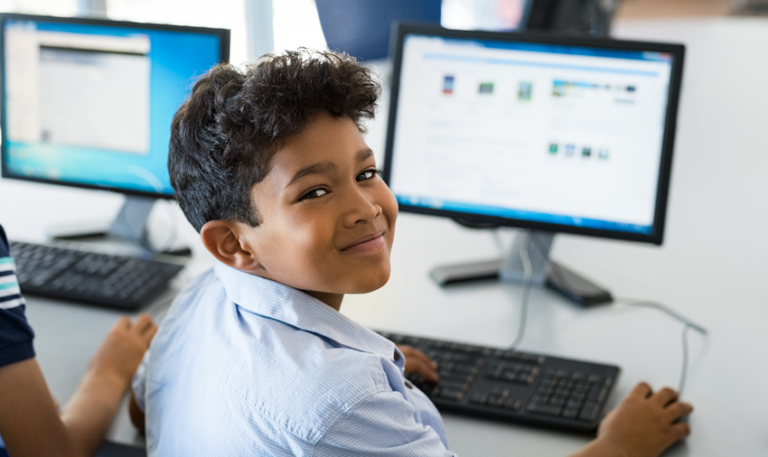
Digital and Technical Fluency – What is it and why does it go beyond screen time?
There is quite a significant difference between a child who uses technology and one who understands it. One of them is just scrolling while the other is thinking critically and questioning it. Among the most important 21st-century skills examples we see today, digital fluency stands out because in a world where digital tools are woven into almost every field, digital fluency has become a bare minimum. One that every child needs to walk into the world.
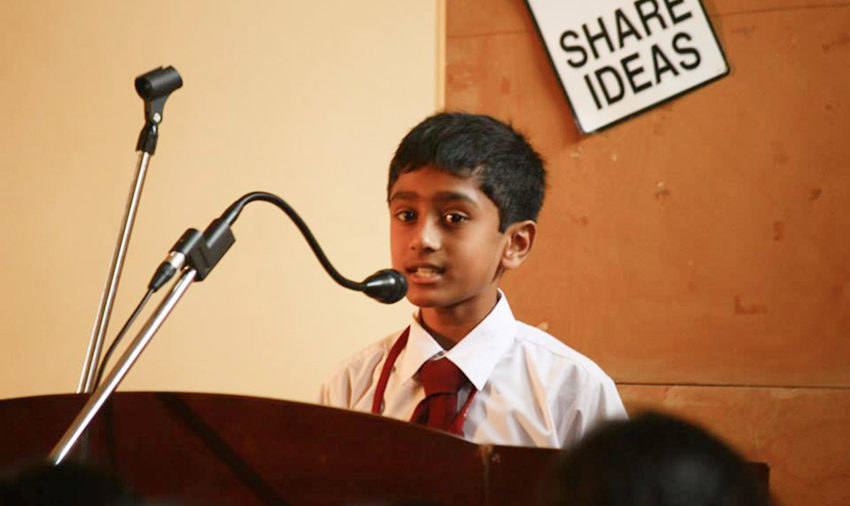
Communication – Why is this the skill that opens every door?
Ask anyone what they wish they had been taught earlier in life, and the answer is always a similar version of, ‘how to communicate well?’ How to speak in front of everyone with clarity in your expression? How to write an email that is clear and considered? How to listen to what someone is really trying to say?
Do not let the plain appearance of these skills fool you. How your child communicates will shape how they are perceived, how their ideas land, and how lasting an impression they leave. So, communication isn’t only about talking. It is the ability to communicate their thoughts clearly, read a room, disagree with grace, and ask the right questions. To add to that, in a country as linguistically diverse as India, this skill becomes a major advantage.
Adaptability – How does it prepare your child for a world that keeps changing?
If there is one thing we have learned from the pandemic, it is that plans can change overnight. And the children who navigated it best were not always the brightest, but rather the ones who could adjust and find new ways to move forward when the old ones disappeared.
Especially in a new era where new roles are emerging that did not exist a decade ago, and a global event can turn everything upside down without warning, this is potentially one of the most future-proof skills a child can develop at every stage.
Critical Thinking – What is it and why can’t an algorithm replace it?
The moment you ask a question; there are several search engines and AI tools to give an answer within seconds. But there are some things that even these tools cannot do, such as determining what is worth trusting. whether the answers are complete, and whether the questions were the right ones to ask in the first place.
It is the difference between a child who reads a news headline and believes it, and one who pauses to consider the perspectives it can take and what might be missing. In a world where information is abundant, critical thinking is perhaps the most important skill your child can carry.
Empathy and Understanding – Why is the skill that the world needs the most?
Empathy is not a skill that makes it onto any official curriculum, yet it might be one of the most powerful and the most underestimated. It can step into someone else’s experience and genuinely consider what it feels like to be them. And the world we live in is vastly diverse, and your child is growing alongside peers from different cultural and socio-economic backgrounds, so empathy is not just a virtue; it becomes a life skill. At Glendale Academy, one of the top international schools in Hyderabad, it is known not just for its academic rigour but also for its commitment to raising children who are both emotionally intelligent and intellectually capable.
How to inculcate these life skills in your child?
Now that we have an idea of the skills that are needed in the 21st Century. Let us find out how you can nurture these skills in your child by building them into small, intentional moments woven into their everyday routine.
- Ask thought-provoking questions – When your child is curious or raises an opinion, engage them in a reflective conversation with questions like, ‘How do you know?’ and ‘Why do you think that is?’ and so on. The more they become curious, the more they will engage in deep, insightful conversations and develop the ability to think critically. Curiosity is a habit, and it starts at home.
- Give them room to stumble and learn – Resist the urge to solve every problem for your child. Sitting with discomfort and finding a way through it is precisely how adaptability and critical thinking are built slowly but steadily. Giving them the confidence to take up challenges.
- Shift screen time to something purposeful – Encourage your child to create something with technology rather than just consume it mindlessly. It could be a short video, a simple animation project or even a well-thought-out poster or creative.
- Read and discuss stories together – Fiction is one of the most powerful tools for building empathy. When your child lives inside different perspectives on the page, they will carry that understanding into the world.
The essence that is carried through all of this is quite simple: be present, encourage their inquisitiveness, and create room for your child to think, stumble and grow. These skills are not built solely within the four walls of a classroom. They are built in between moments of everyday life.
Wrapping up
At the end of the day, they grow from small moments and become habits over time. Through the questions you encourage over dinner, the stories you share before heading to bed and how steadily you respond when things go sideways.
As you read this, think about your child and the world they are growing into. A gentle reminder to all the parents out there, the most future-ready thing you can do for them is raise them to think clearly, communicate honestly, adapt without fear, and genuinely care about the people around them. Everything else will align naturally from there. And if you are looking for a school that makes this its mission, Glendale Academy is a worthy institution to be noted. It is counted among the best CBSE schools in Hyderabad, with its sprawling campus and a holistic approach to education. And it is also a thoughtful choice for families exploring schools in Suncity Hyderabad. To explore more about the school and its campus, visit our website to submit an enquiry and book a campus tour
FAQs
Both the skills and traditional academic knowledge are important in their own ways. While traditional academic knowledge is important for education, life skills help your child apply that knowledge creatively and navigate difficult challenges that no textbook has anticipated. Ultimately, they work the best together.
Most of these skills form in the first few years of life. Empathy develops through early social interaction, adaptability through changes in routine, and communication through conversations around them. What changes with age is the complexity and context. But it is important to understand that these skills are nurtured consistently and over time
The current education policy has shifted toward a holistic approach rather than the old rote-learning method; therefore, it is adapting to current needs and focusing on building skills such as communication, digital fluency, and more, rather than just memorising concepts.