Farewell

How Leader in Me (LIM) Builds Confidence in Young Learners

How Leader in Me (LIM) Builds Confidence in Young Learners

Key Takeaways

  • Leader in Me is a research-backed, whole-school programme rooted in Stephen Covey’s 7 Habits of Highly Effective People.
  • It equips children with leadership skills, goal-setting habits, and emotional tools alongside academics.
  • Every child is given a leadership role, building genuine self-belief from an early age.
  • Results include improved behaviour, stronger academic engagement, and greater confidence.
  • At Glendale School, LIM is woven into everyday classroom life.


Why Confidence Matters More Than You Think

Ask any parent what they want for their child, and “confidence” will be near the top of the list. A child who believes in themselves is far more likely to raise their hand, try again after failing, and step into challenges rather than away from them.

But the data tells a concerning story. An NCERT Survey (2022) found that 43% of students in India experienced mood swings, 14% had extreme emotional episodes, and 11% reported anxiety. These children need more than textbooks. They need tools to understand themselves and lead their own lives.

That is precisely where the concept of ‘leader in me’ comes in.

What is ‘Leader in Me’?

Leader in Me (LIM) is an evidence-based, social-emotional learning programme developed by FranklinCovey Education. Built on the belief that every child has the potential to be a leader, it creates nurturing environments where students feel safe, confident, and genuinely supported.

The programme addresses the whole child: leadership, culture, and academics together, embedded naturally in everyday school life.

At Glendale School, one of the top international schools in Hyderabad,’ leader in me’ forms a core part of how students are guided to grow, speak up, and take ownership of their futures.

What Are the 7 Habits at the Heart of LIM?

The 7 habits leader in me framework is drawn from Stephen Covey’s The 7 Habits of Highly Effective People, adapted for children at every stage of development.

Habit

What It Teaches

Be Proactive

Take responsibility for your choices

Begin with the End in Mind

Set goals and work towards them

Put First Things First

Prioritise what matters most

Think Win-Win

Seek solutions that benefit everyone

Seek First to Understand

Listen before speaking

Synergise

Value teamwork and different strengths

Sharpen the Saw

Care for your physical and emotional wellbeing


Each habit builds inner strength, emotional intelligence, and confidence that holds steady even when things get hard.

How Does ‘Leader in Me’ Build Confidence in Children?

Here is what actually happens in an LIM school:

  • Every child holds a leadership role. When a child is trusted with real responsibility, they begin to trust themselves.
  • Students set their own goals. Ownership of learning is transformative. Children stop waiting to be told what to do and start directing their own progress.
  • The curriculum starts early. The Early Learning curriculum introduces responsibility, time management, and emotional regulation through age-appropriate activities, forming the building blocks of academic readiness.

Empowering students with leadership skills results in increased confidence, better social interactions, and fewer behaviour incidents at school and at home.

What Does This Look Like in a Real Classroom?

Picture a seven-year-old presenting her personal goals to her class. Or a ten-year-old calmly mediating a disagreement using habits he has genuinely internalised. This is ‘leader in me’ in action.

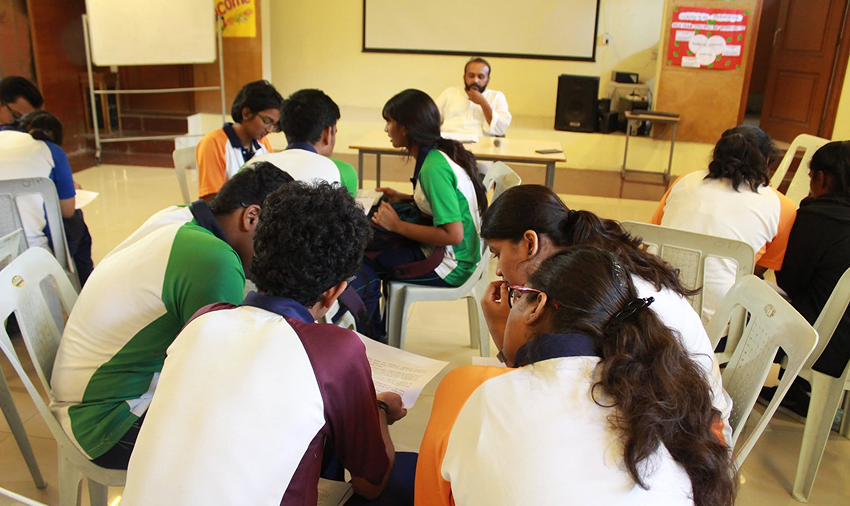
Students maintain personal leadership notebooks to track their growth. Schools use scoreboards to celebrate progress visibly. Leadership Days invite families in to witness their children lead.

For schools in Hyderabad ready to go beyond rote learning, this is a framework that builds character right alongside academic knowledge.

Why Are Schools and Parents Seeing Real Results?

The numbers are hard to ignore. In a study of 248 parents from Leader In Me schools, 84% reported being satisfied or highly satisfied with the programme, and 78% were highly satisfied with how it encouraged character development in their children.

Six independent studies, including three peer-reviewed journal articles, confirm positive impacts on academics and student behaviour, with research consistently pointing to early, visible improvements in day-to-day conduct and confidence.

For top CBSE schools in Hyderabad like Glendale School, this affirms what educators have always believed: when children feel truly capable and valued, they rise to the occasion every time.

At Glendale, the Leader in Me Programme is seamlessly integrated into the learning experience, helping students develop essential life skills from an early age. Inspired by the globally recognised 7 Habits of Highly Effective People, the programme encourages students to take initiative, set meaningful goals, communicate effectively, collaborate with others, and become responsible decision-makers. Rather than viewing leadership as a role reserved for a select few, Glendale nurtures the idea that every child has the potential to lead in their own unique way. 


Ready to discover how Glendale nurtures confident learners and future leaders? Visit our admissions enquiry page and take the first step towards your child’s transformative educational journey: Enquire Now

FAQs What age groups does Leader in Me work for? LIM serves students from early childhood (birth…
How Glendale School Supports Neurodiverse Students with AI-Enabled Learning?

How Glendale School Supports Neurodiverse Students with AI-Enabled Learning?

Key Takeaways

  • 1 in 8 children in India has at least one neurodevelopmental condition, highlighting the urgent need for inclusive education.
  • AI-enabled learning tools personalise the classroom experience by adapting content to each student’s pace and learning style.
  • Research shows that AI-mediated feedback reduces cognitive overload and boosts learner autonomy for neurodiverse students.
  • Glendale School integrates AI thoughtfully, with teachers guiding the technology rather than being replaced by it.
  • AI supports students with ADHD, autism, dyslexia, and other learning differences through scaffolded, step-by-step pathways.
  • Students in AI-enhanced classrooms report increased confidence and willingness to take on challenging tasks.


You know that feeling when you watch your child struggle in class, not because they are not trying hard enough, but because the way the lesson is delivered simply does not suit how their brain works? If you have a neurodiverse child, you have likely lived that frustration.

Here is the truth: traditional, one-size-fits-all classrooms were never designed with every learner in mind. But education is changing, and it is changing fast. Schools that are genuinely committed to every child’s growth are now turning to AI learning to bridge that gap. And at Glendale School, one of the best international schools in Hyderabad, this commitment goes well beyond a buzzword.

This blog walks you through exactly how Glendale School is using artificial intelligence in education to support neurodiverse students, what that looks like inside the classroom, and why it matters for your child’s future.

What Does It Mean to Be a Neurodiverse Learner?

Neurodiversity is an umbrella term that includes students with ADHD, autism spectrum conditions, dyslexia, Irlen Syndrome, and other differences in how the brain processes information. These students are creative, capable, and intelligent. They simply learn differently.

The scale of this in India is significant. According to Jus Corpus, approximately 1 in 8 children in India has at least one neurodevelopmental condition. That means in a classroom of 32 students, four of them are likely navigating a learning environment that was not built for them.

In mainstream classrooms, these students often face challenges with sustained attention, managing multi-step tasks, and processing complex instructions quickly. Without the right support, their potential goes unrecognised.

Why Does AI-Enabled Learning Matter for Neurodiverse Students?

The beauty of artificial intelligence in education is personalisation. Unlike a single teacher managing 30 students with varied needs, an AI-powered system can adapt content, pacing, and feedback in real time for each individual learner.

For neurodiverse students, this matters enormously. Structured prompts, visual organisers, and step-by-step breakdowns can reduce what researchers call ‘cognitive overload’, which is when a student’s working memory becomes overwhelmed by too many competing demands at once.

A landmark longitudinal study published in the Global Journal of Educational Thoughts (2026) followed neurodiverse middle school learners over two academic years. The findings were clear: when AI tools were aligned with Universal Design for Learning principles and guided by teachers, students showed greater autonomy, reduced cognitive barriers, and more confidence during writing tasks.

One student in the study reflected: the AI helped them see how to fix their paragraph when they did not know what to change. Another noted that breaking the task into steps made the writing easier. These are small words with enormous implications.

How Does Glendale School Use AI to Support Neurodiverse Students?

At Glendale School, recognised among the best CBSE schools in Hyderabad, the approach to AI learning is intentional and teacher-led. AI is a tool in the educator’s hands, and its purpose is always to serve the student.

Here is how it works in practice:

  • Differentiated materials: Teachers use AI to generate multiple versions of the same worksheet for different learners, including scaffolded prompts, visual organisers, and simplified instructions, all aimed at the same learning goal.
  • Adaptive learning pathways: Students can choose the level of support they need, whether that is a visual roadmap, a checklist, or a step-by-step guide, rather than being locked into a single format.
  • Real-time feedback: AI tools give students instant feedback on their work, allowing them to self-correct and revise independently before seeking teacher input.
  • Human-in-the-loop oversight: Every AI-generated resource is reviewed and adapted by a qualified teacher before reaching the student. The technology supports the educator; it does not replace them.

What Tools and Approaches Does Glendale Use in the Classroom?

The classroom experience for neurodiverse students at Glendale is shaped by a combination of research-backed approaches and practical AI-powered tools. The table below gives you a clear overview:

Approach

How It Helps Neurodiverse Students

Supported Conditions

Visual Organisers

Breaks complex ideas into manageable visual maps, reducing planning overload

ADHD, Autism, Dyslexia

Scaffolded Prompts

Guides students through tasks step by step, building confidence

ADHD, Autism, Executive Function Challenges

Adaptive Feedback

Delivers instant, personalised suggestions on student work

Dyslexia, Irlen Syndrome, ADHD

Chunked Task Design

Divides long tasks into shorter segments, reducing overwhelm

ADHD, Autism

Multi-modal Content

Presents information through text, visuals, and interactive formats

All Neurodiverse Learners


What Does the Research Say About the Impact of Artificial Intelligence in Education?

The evidence is growing. The Global Journal of Educational Thoughts research (2026) identified four key themes from AI-inclusive classrooms:

Theme

What It Means for Students

AI as a scaffold for learner autonomy

Students revise their own work more independently, reducing dependence on teachers for every step

Flexible task design

Students engage with the same objectives through different levels of support, preserving shared goals

Reduced cognitive load

Structured prompts and checklists help students manage planning and focus on the task itself

Social-emotional confidence

Students attempt harder tasks more willingly when they know support is available


The best schools in Hyderabad understand that the impact of artificial intelligence in education lies in pedagogy, not just technology. It is not the sophistication of the tool that matters; it is how thoughtfully it is embedded in the learning environment.

At Glendale, this philosophy is lived daily. Teachers design with the student in mind first. AI follows. By integrating intelligent tools with purpose-driven teaching practices, Glendale empowers students to think critically, learn independently, and develop the skills needed to thrive in an ever-evolving world.

Discover how Glendale is shaping future-ready learners through meaningful innovation. Enquire today and experience the difference.

FAQs What is AI-enabled learning for neurodiverse students? AI-enabled learning uses technology to personalise how content is…
What is the Difference Between Primary & Secondary School: Complete Guide

What is the Difference Between Primary & Secondary School: Complete Guide

Key Takeaways

  • Primary school (Classes 1 to 5) focuses on building foundational literacy, numeracy, and social skills.
  • Secondary school (Classes 6 to 12) deepens subject knowledge and prepares students for board exams and beyond. 
  • Teaching styles shift from nurturing and play-based to analytical and subject-specialist led. 
  • Both stages are equally critical and each one builds meaningfully on the other.
  • Early awareness of these differences helps parents make better decisions about schooling.


If you have a child approaching school age, or one who is about to move from junior to senior classes, you have probably asked yourself: how different is secondary school from primary? It is a fair question, and a very important one. These two stages of schooling are quite distinct in how they work, what they expect from students, and how they shape a child’s development. Yet, many parents go through years of schooling without a clear picture of what actually changes and why.

This guide is here to help. Whether you are a parent weighing school options, a student curious about what lies ahead, or a teacher looking for a clear overview, this complete guide walks you through everything you need to know about the difference between primary and secondary school in the Indian context.

What is Primary Education?

In India, it covers Classes 1 to 5, typically for children between the ages of 6 and 11. This is the first formal stage of schooling after pre-primary or kindergarten, and it forms the academic and social foundation for everything that follows.

Primary school is where children learn how to learn. The focus here is broad rather than deep. A child in Class 2 is not expected to analyse poetry or solve algebraic equations. Instead, they are building the core skills that make all future learning possible:

  • Literacy: Reading, writing, and basic comprehension in the mother tongue and English.
  • Numeracy: Counting, addition, subtraction, and an introduction to shapes and measurements.
  • Social awareness: Environmental studies, civic sense, and understanding the world around them.
  • Creative expression: Art, music, and physical education to develop the whole child.

One of the hallmarks of good primary schooling is the class teacher model. One teacher handles most or all subjects for the class, which gives young children a consistent adult to rely on. This consistency matters enormously at an age when children are still building confidence and emotional security.

Assessment at this stage is usually informal and continuous, using projects, oral work, and classroom activities rather than high-stakes exams. The idea is to observe how a child is growing, not to rank them.

What is Secondary Education?

This covers Classes 6 to 12, broadly split into middle school (Classes 6 to 8), secondary (Classes 9 and 10), and higher secondary (Classes 11 and 12). Students range from approximately 11 to 18 years of age.

Secondary school is a significant step up. The curriculum becomes more specialised, the pace picks up, and students are expected to take far greater ownership of their learning. Here is what changes:

  • Subject specialists: Each subject is taught by a dedicated teacher, often a postgraduate in their field. Students move between classrooms or teachers rotate.
  • Deeper content: Mathematics becomes algebra and geometry, science splits into Physics, Chemistry, and Biology, and languages involve literary analysis.
  • Formal examinations: Board examinations at Class 10 and Class 12 are pivotal milestones that determine future academic pathways. 
  • Critical thinking: Students are expected to form arguments, conduct experiments, and think independently.
  • Extracurriculars with purpose: Sports, arts, and clubs at this stage begin to feed into university applications and overall personality development.

It is worth noting that secondary education in India varies by board: CBSE, ICSE, and State Boards each have their own structures and examination patterns. International boards like Cambridge IGCSE and IB also operate at this level in many cities.

How Do Primary and Secondary Schools Differ?

Here is a clear side-by-side look at the key differences:

Feature

Primary School

Secondary School

Age Group

6 to 11 years

11 to 18 years

Classes

Class 1 to 5

Class 6 to 12 (India)

Teachers

One class teacher for most subjects

Subject specialists per period

Learning Style

Play-based, activity-driven

Analytical, independent study

Curriculum

Broad and foundational

Specialised and structured

Assessment

Informal, continuous evaluation

Formal exams and board assessments

Goal

Build foundational skills

Prepare for higher education or career


Beyond the table, there are a few differences that do not always get talked about but are just as real.

Emotionally, primary school children still rely heavily on adults for guidance and reassurance. Secondary students are developing their own identities, which can sometimes mean friction at home and at school. This is normal. It is part of growing up, and good schools create environments where that growth is supported rather than suppressed.

Socially, peer relationships shift too. In primary school, friendships are fairly fluid. In secondary school, peer groups become more defined and social pressures increase. Schools that actively build a positive culture through mentorship programmes and house systems handle this transition far better.

Why Does Each Stage Matter?

Both stages matter deeply, and neither is more important than the other. Think of it as constructing a building: primary school is the foundation; secondary school is the structure you build on top of it. A shaky foundation creates problems for the floors above. A well-laid foundation makes the structure stronger.

Why Primary Matters

  • Children who struggle with reading and writing in primary school carry those gaps into secondary.
  • Social skills formed in primary school, such as cooperation, empathy, and communication, serve students throughout life.
  • A child who loves learning at age 8 is far more likely to stay engaged at age 15.

Why Secondary Matters

  • Academic choices made in Classes 9 to 12 directly influence university and career paths.
  • This is where students discover what they are truly passionate about and what they are good at.
  • Board examination results remain relevant for university admissions, scholarships, and even some employment opportunities in India.

According to the UDISE+ 2024-25 Report, the secondary-level dropout rate in India stands at 11.5%, which highlights how critical it is for schools and parents to keep students engaged and supported through this transition.

When Should Parents Start Thinking About the Transition?

Honestly? Earlier than most do. The transition from primary to secondary school is one of the most significant shifts in a child’s academic life, and a little preparation goes a long way.

Here are some things parents can do to make the move smoother:

  • Talk about it early: From Class 4 or 5, have casual conversations about what secondary school looks like. Take away the mystery.
  • Build independence gradually: Encourage children to organise their own bags, track their homework, and manage small responsibilities at home.
  • Choose the right school: The school environment matters enormously. Look for schools that have strong pastoral care, experienced subject teachers, and a track record of supporting students through this transition.
  • Stay involved but step back: Secondary school students need parents to be present but not hovering. Support, do not micromanage.

For families in and around Hyderabad, there are several strong options to consider. If you are exploring schools in Tellapur, schools in Suncity, Hyderabad, or best international schools in Hyderabad, it is worth looking for institutions that offer continuity from primary through to senior secondary, so your child builds relationships and familiarity in a single environment rather than adjusting repeatedly.

A Final Word from Glendale School

Understanding the difference between primary and secondary school helps parents make informed decisions at every stage of their child’s educational journey. While primary education lays the foundation for academic confidence, social development, and a love for learning, secondary education builds on that foundation by developing critical thinking, subject expertise, and future readiness.

At Glendale School, we believe that both stages are equally important and should work seamlessly together to support every child’s growth. Our integrated approach ensures that students experience a smooth transition from primary to secondary education, supported by experienced educators, a nurturing environment, and a future-focused curriculum.

Whether your child is taking their first steps into formal education or preparing for the challenges of senior school, Glendale School provides the guidance, resources, and opportunities needed to help them thrive.

Looking for a school that supports your child from the early years through senior secondary education? Get in touch with Glendale School today to learn more about our admissions process, campus facilities, and holistic learning programmes.

Schedule a campus visit or speak with our admissions team to discover how Glendale School can help your child build a strong foundation for lifelong success.

A Final Word from Glendale School

Understanding the difference between primary and secondary school helps you make better decisions, ask the right questions, and support your child at every stage of their education. Both phases are rich with opportunity when approached with care and awareness.

At Glendale School, we believe that seamless continuity from the primary years through to senior secondary is one of the greatest gifts a school can offer a child. Our curriculum is designed to build confident learners in the early years and equip them with the critical thinking and life skills they need to thrive in secondary school and beyond.

If you have questions about admissions or would like to learn more about our programmes, we welcome you to visit our website or reach out to our admissions team.

FAQs What is the age for primary school in India? Primary school in India generally covers children…